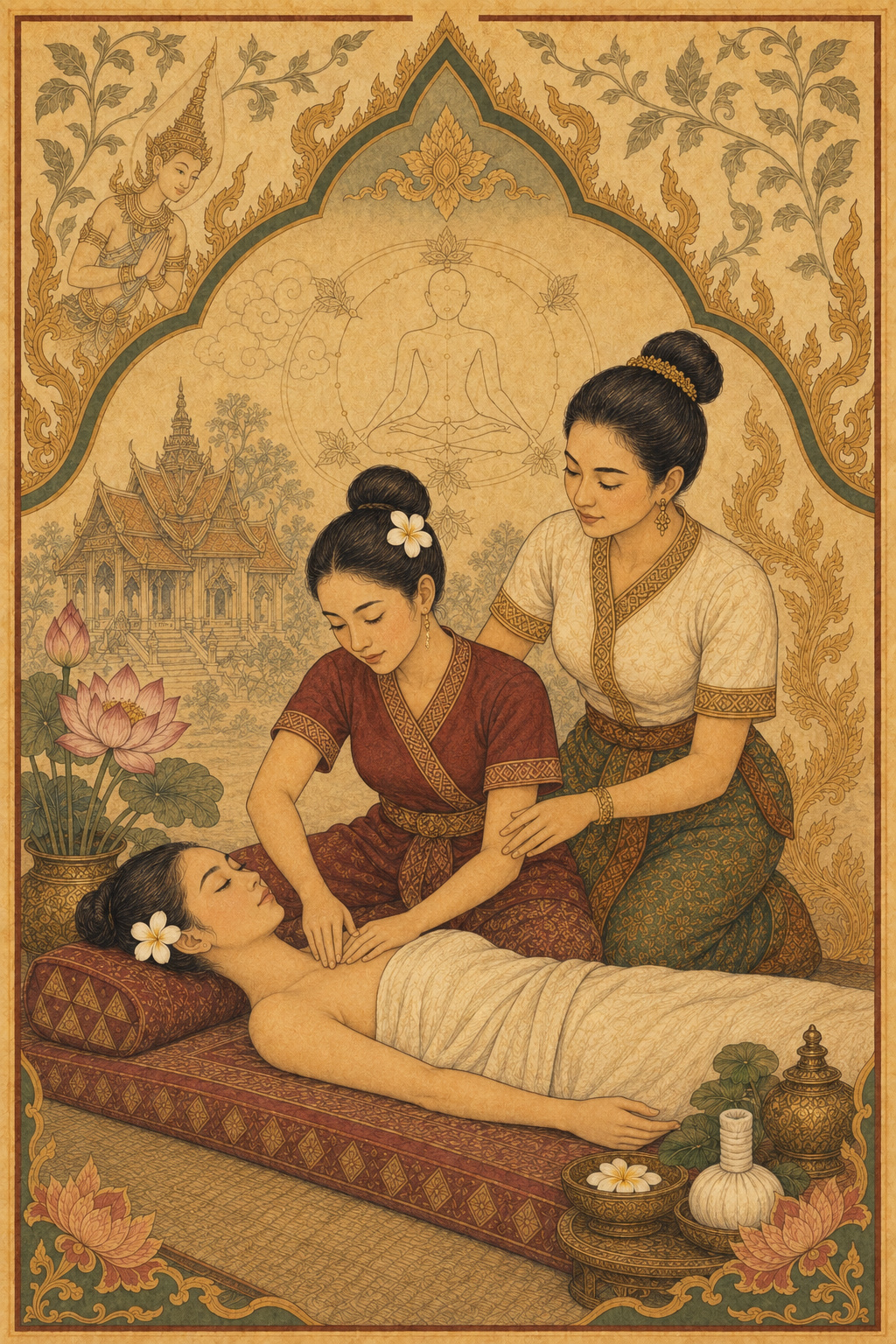
Teaching manual lymphatic techniques begins with the ability to keep contact light, explain a pathway and recognise when practice must stop. At Nuad Thai School, students can explore these skills through the Private Lymphatic Drainage Massage Course. This guide proposes a classroom sequence for demonstration, supervised repetition and assessment.
The focus is how to teach and observe a technique. A spa lesson does not qualify a student to diagnose swelling or manage clinical lymphoedema. Medical symptoms require assessment by an appropriate health professional before hands-on practice.
Key Takeaways
- Teach anatomy before asking students to copy a movement.
- Observe gentle skin movement, a controlled rhythm and a relaxed working posture.
- Practise only after screening, consent and clear agreement about the area of contact.
- Assess the decision to stop or refer as carefully as manual technique.
Research Context and Scope
The National Cancer Institute explains clinical lymphoedema care, including manual lymphatic drainage within a broader programme managed by trained specialists. That clinical context should not be presented as evidence that a general spa session treats disease. A short course, an attractive diagram and comfortable contact cannot replace specialist competence.
The NCCIH massage overview describes evidence limitations and advises against delaying medical care. For teaching, the practical implication is to use modest language, explain the limits of the lesson and avoid guaranteed outcomes. This guide makes no detoxification, immune-boosting or disease-treatment claim.
Anatomy: Explain the Map Before the Movement
The NCBI Bookshelf physiology reference describes a network of lymphatic capillaries, collecting vessels, nodes and ducts involved in fluid balance and immune function. These normal functions do not establish what a particular massage session will achieve.
Ask the student to locate the region on an anatomy model, describe its superficial pathways and distinguish vessels from muscles. A teaching plate is schematic: its arrows are learning cues, not an individual treatment map. Previous surgery, damaged nodes or diagnosed lymphoedema require specialist assessment; students must not improvise a new drainage route from an illustration.
Screening, Consent and Referral
Before practice, ask about new swelling, pain, recent surgery, infection, clotting history, medical treatment and any clinician restrictions. Record relevant information without trying to name a diagnosis. The National Cancer Institute notes that swelling has several possible causes, including heart, kidney and venous conditions. Unexplained swelling belongs in a medical assessment, not a classroom experiment.
The CDC describes clot warning signs such as limb swelling, pain, warmth and redness. Stop practice and arrange prompt medical assessment when these are reported. Breathing difficulty or chest pain requires immediate medical help. Students should recognise warning signs without claiming they can rule out a clot.
Explain the intended contact, positioning and draping. Ask permission before touching and make it easy to withdraw consent. Active infection or unresolved cardiac or renal concerns require clinical advice before considering a session.
Demonstrate Light Contact and Rhythm
On a screened, consenting practice partner, demonstrate a small movement slowly enough for observers to see the hand settle, gently move the skin and release. Keep shoulders relaxed and wrists comfortable. Use only the region and sequence taught by the qualified instructor. Students should not seek a stronger sensation, deep muscle compression or visible redness as proof of success.
Demonstrate once without interruption, then repeat while explaining the contact and release. Invite the student to describe what they saw before trying it. Correct one variable at a time: hand placement, pressure or rhythm. Ask the practice partner whether the contact remains comfortable; silence is not consent to increase pressure.
Step-by-Step Supervised Practice
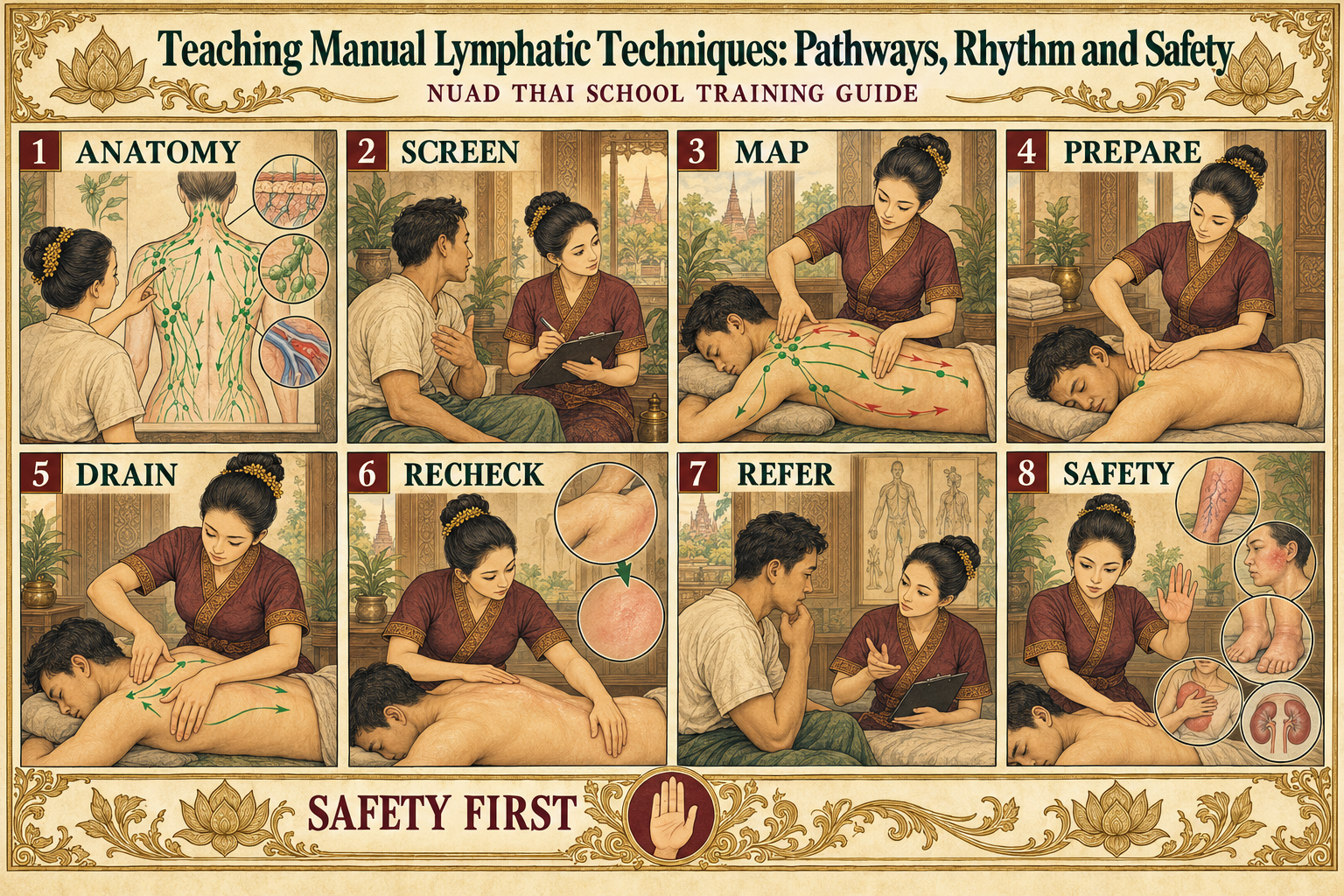
- Screen. Review history, current symptoms and reasons to postpone. Confirm consent.
- Map. Identify the relevant superficial region on a teaching model before touching the partner.
- Prepare. Arrange supports and draping. Rehearse the instructor's proximal preparation with calm, light contact.
- Drain. Repeat the demonstrated gentle skin movement and release, following the taught sequence without deep pressure.
- Recheck. Ask about comfort and observe the skin. Pause if anything unexpected appears.
- Refer. Explain why unexplained swelling or concerning symptoms require medical assessment rather than an adapted routine.
These checkpoints organise a lesson; they are not a home-treatment prescription. An instructor should stop the exercise whenever the student loses control, consent becomes uncertain or the partner reports discomfort.
Equipment, Hygiene and Records
Prepare a stable table, fresh linens and supports that allow the partner to rest comfortably. Clean contact surfaces between practice sessions and wash hands according to the school's hygiene procedure. Keep clean supplies separate from used towels. Use products only when the instructor's method calls for them; excessive glide can make gentle skin movement difficult to observe.
Record the practice region, consent, relevant screening information, instructor feedback and any reason for stopping. Describe observations plainly. A note that the partner felt comfortable is not evidence that swelling was treated or lymph flow was measured.
Complete Infographic
A Practical Assessment Rubric
| Checkpoint | What the instructor observes | Reason to pause |
|---|---|---|
| Explanation | Student identifies the region and describes the lesson's limits. | Claims to diagnose swelling or guarantee results. |
| Contact | Gentle skin movement, controlled release and comfortable posture. | Deep pressure, discomfort or loss of control. |
| Communication | Clear consent, appropriate draping and regular comfort checks. | Uncertain permission or ignored feedback. |
| Judgment | Student recognises when to postpone or refer. | Continues despite unexplained symptoms. |
Use a second demonstration and another supervised attempt when a skill needs correction. Completing a sequence from memory is insufficient if the student cannot explain a safety decision. Assessment should document what was observed rather than infer clinical competence.
Related Training Paths
- Private Lymphatic Drainage Massage Course: the primary subject-specific learning path.
- Private Facial Treatment Course: complementary study of delicate contact, skin observation and facial hygiene.
- Private Prenatal Massage Course: further practice in screening, supported positioning and referral awareness; pregnancy-related swelling requires its own assessment.
- Private Swedish Massage Course: complementary work on posture, draping and communication, while keeping its techniques distinct from lymphatic skin movement.
FAQ
Does this lesson qualify a student to treat lymphoedema?
No. It introduces supervised massage skills and safety decisions. Clinical lymphoedema care requires appropriate specialist training, assessment and professional scope.
Should a student use deeper pressure if the partner feels very little?
No. The aim is controlled, gentle skin movement. Ask the instructor to check the technique rather than increase pressure to create a stronger sensation.
How should progress be assessed?
Observe anatomy explanation, contact, rhythm, consent, draping and the decision to stop or refer. Give specific feedback and reassess under supervision before progressing.