◆ UTTS certification
◆ Private massage academy in Bangkok
◆ Operated by Loft Thai Spa
Complete guide
What Is Thai Massage?
Nuad Thai originsSen line theoryAssisted stretchingBenefits and safety
Thai massage, traditionally called Nuad Thai, is a mat-based bodywork system that combines rhythmic pressure, assisted stretching, joint mobilization, rocking movements and mindful therapist body mechanics. It is often described as a meeting point between traditional Thai medicine, Buddhist care culture, acupressure and passive yoga.
Thai Massage Is An Active, Clothed, Full-Body Treatment.
Thai massage is different from a classic oil massage because the receiver normally stays clothed, lies on a mat or firm surface, and is moved through a sequence of pressure, stretches and assisted positions. The therapist uses palms, thumbs, forearms, elbows, knees, legs or feet when appropriate, but the real skill is not force. The skill is using body weight, angle, rhythm and timing so pressure feels deep without becoming uncontrolled.
A traditional Thai massage session usually works from the feet upward, then through the legs, hips, abdomen area, back, shoulders, neck, arms and head. The therapist may compress muscles, press along energetic pathways known as Sen lines, mobilize joints, rock the body gently, or guide the client into yoga-like stretches. The receiver participates passively by breathing, relaxing and communicating comfort levels.
In a school setting, Thai massage is taught as a complete method: how to prepare the receiver, how to protect the therapist body, how to read tension, how to adapt pressure, how to transition between positions, and how to build a treatment that feels coherent from beginning to end.
Origins
The Origins Of Thai Massage: Medicine, Monasteries And Living Tradition.
Thai massage cannot be reduced to one inventor or one country influence. It is a living Thai healing tradition shaped over centuries by local bodywork, Buddhist ethics, Indian medical ideas, yoga-like movement, herbal medicine, and Southeast Asian care practices.
Ancient rootsTraditional medicine and Buddhist care
Thai massage is commonly connected to the figure of Jivaka Kumarabhacca, a physician remembered in Buddhist tradition. Historically, the practice developed through oral teaching, family knowledge, temple medicine and practical care for ordinary bodies.
Thai developmentNuad Thai becomes a Thai healthcare art
Within Thai traditional medicine, massage was used alongside herbs, steam, stretching, diet and spiritual care. The focus was balance: freeing stiffness, supporting mobility and helping the body return to a more comfortable state.
Temple preservationWat Pho and public teaching
Bangkok temples, especially Wat Pho, became important centers for preserving and teaching Thai traditional medicine. Written diagrams and massage knowledge helped move Nuad Thai from private transmission into public education.
TodayGlobal wellness and professional training
Thai massage is now practiced worldwide, from wellness studios to medical-spa settings. In 2019, Nuad Thai was inscribed on UNESCO's Representative List of the Intangible Cultural Heritage of Humanity, confirming its cultural importance.
Visual guide
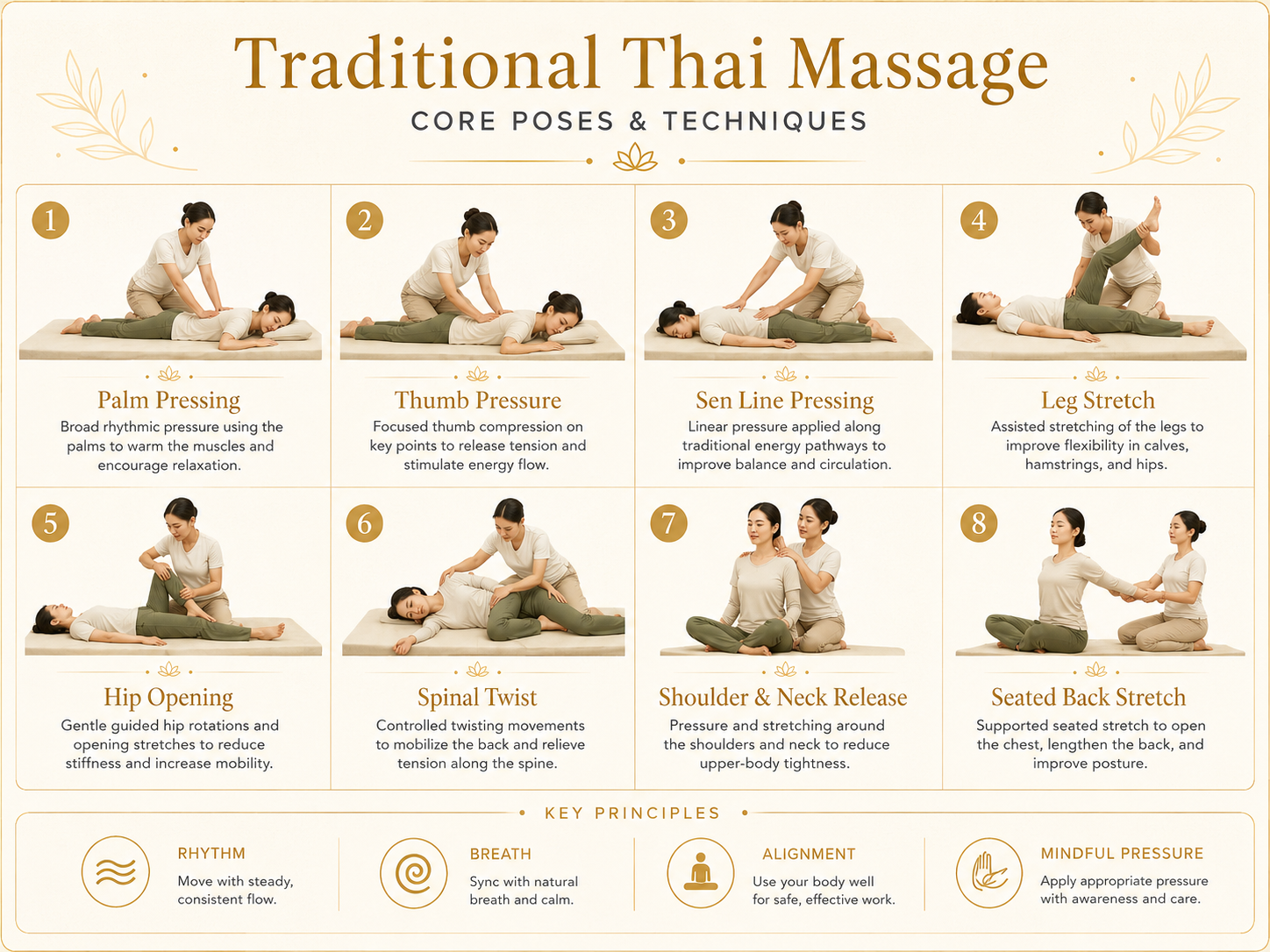
Core Thai Massage Poses And Techniques At A Glance.
This visual summary brings together the pressure work, assisted stretches and key principles that appear throughout a traditional Thai massage sequence.
Use this as a quick visual map before reading the technique breakdown below.
Techniques
The Main Thai Massage Techniques Explained.
A good Thai massage is not one single technique repeated everywhere. It is a sequence of different tools, each chosen for a specific effect on comfort, mobility, circulation, posture or nervous-system relaxation.
Palm compression
Broad pressure from the palm warms the tissue and helps the therapist feel how the body responds before using more precise pressure.
Thumb pressure
Thumbs can work smaller areas and Sen line points, but must be used carefully to avoid therapist strain and client discomfort.
Forearm and elbow pressure
These tools can deliver deeper pressure with less effort, especially on large muscle groups, when angle and communication are correct.
Assisted stretching
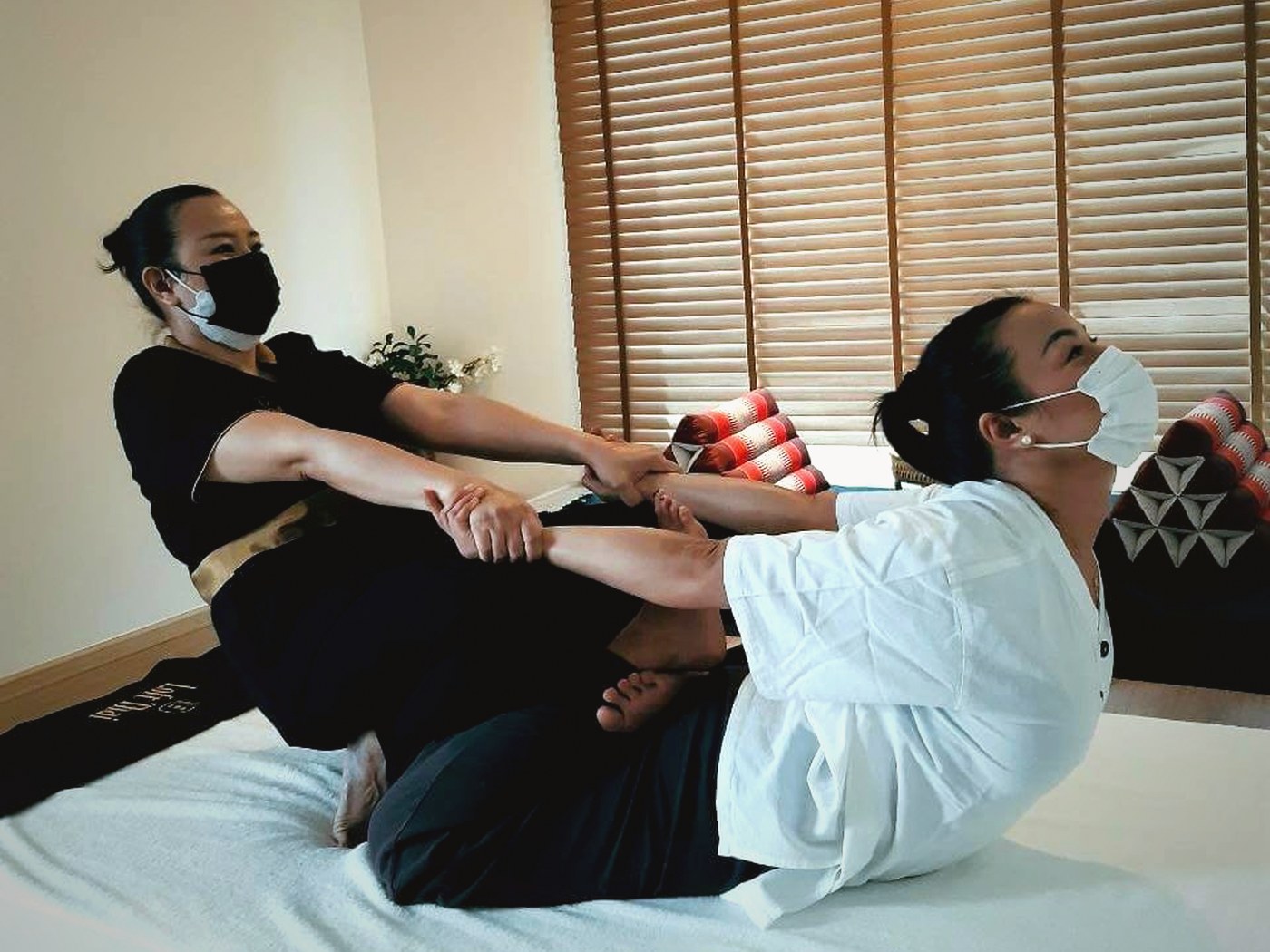
The receiver is moved into controlled stretches that may resemble yoga positions. The stretch is adapted to the person's real range of motion.
Rocking and rhythmic movement
Gentle rocking softens guarding and makes transitions smoother. It also gives Thai massage its meditative, wave-like quality.
Joint mobilization
Small circles, traction and guided movement can help the client feel freer, but they should never be forced or used on unstable joints.
Photo guide
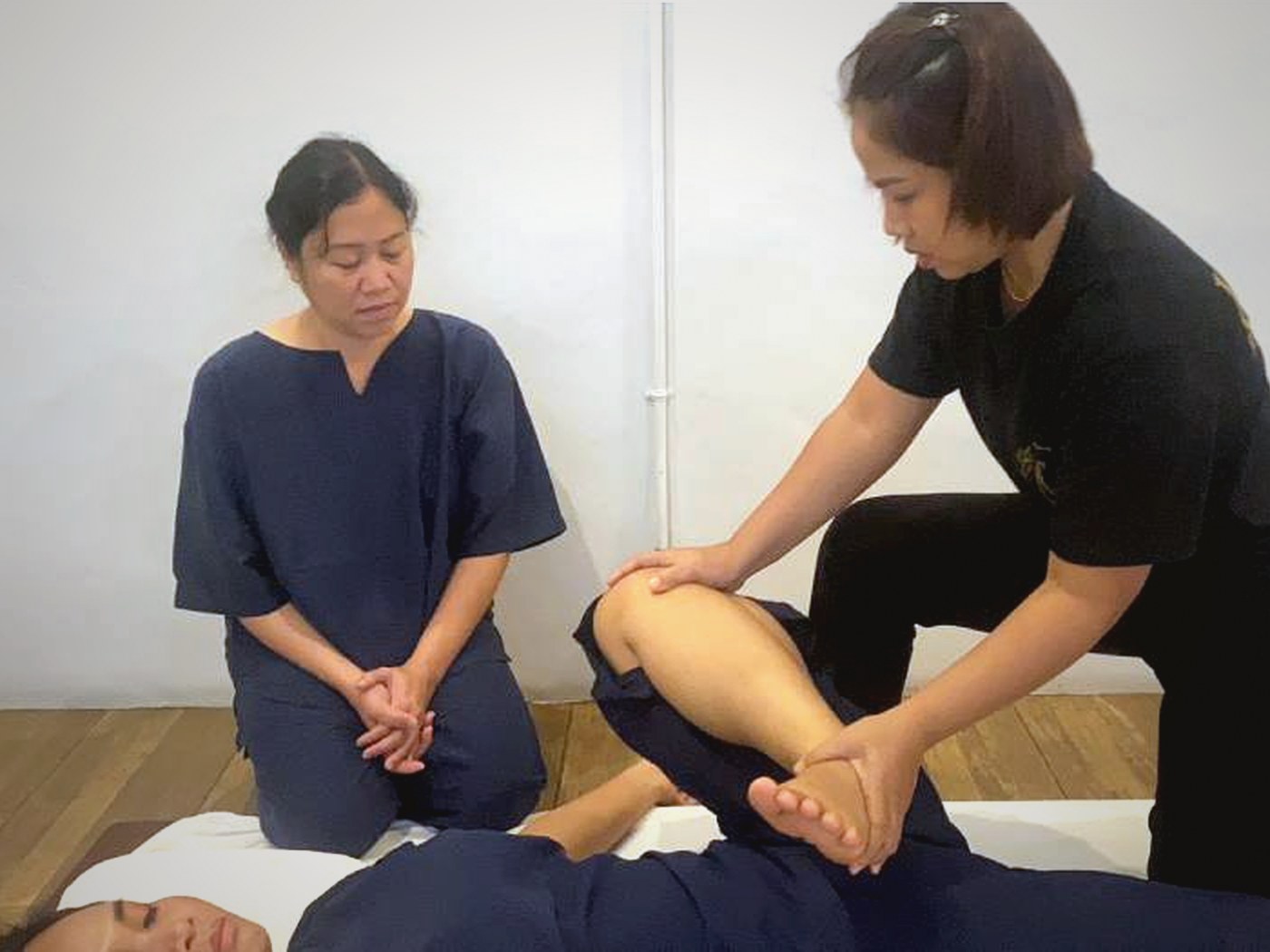
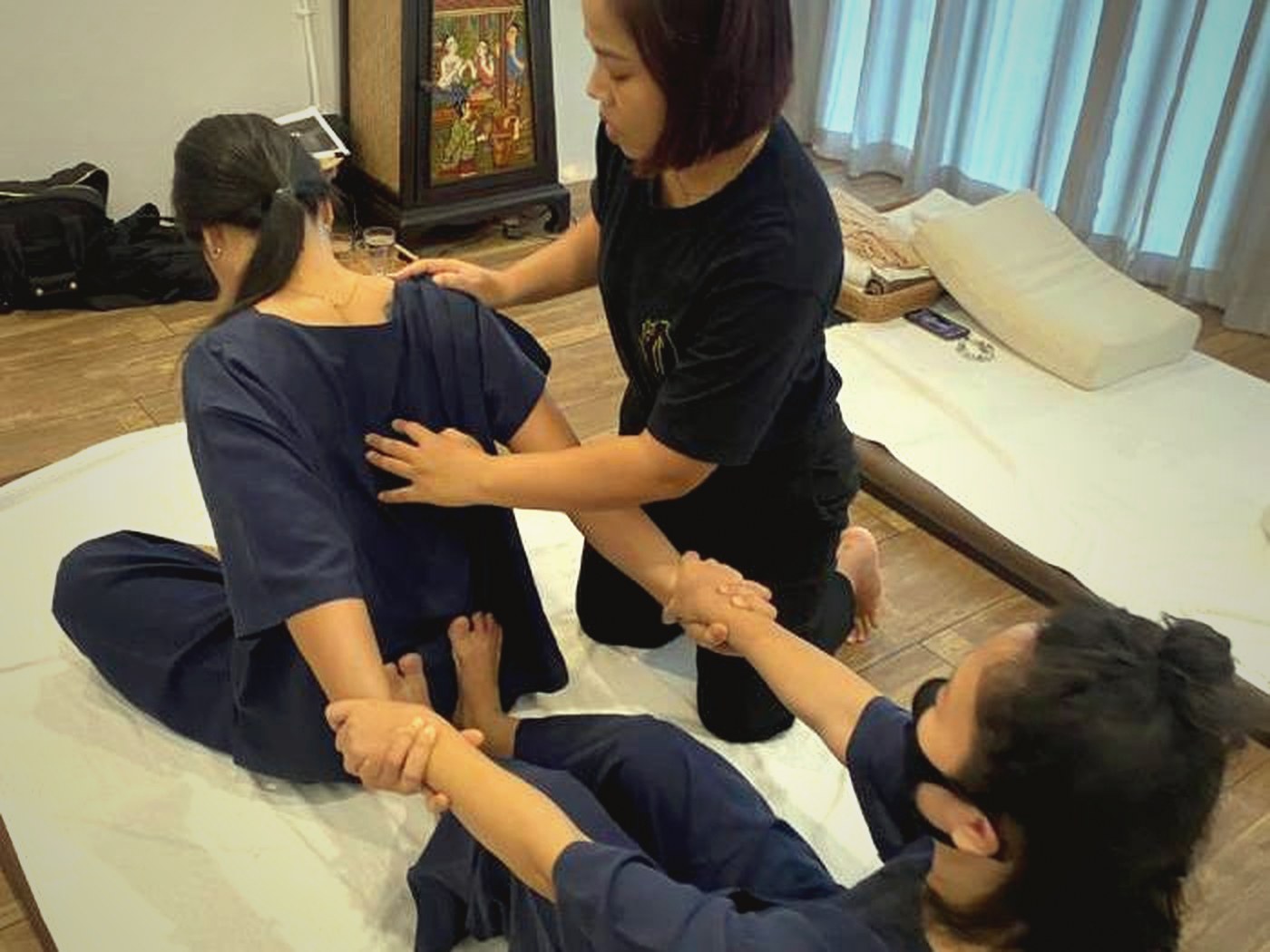
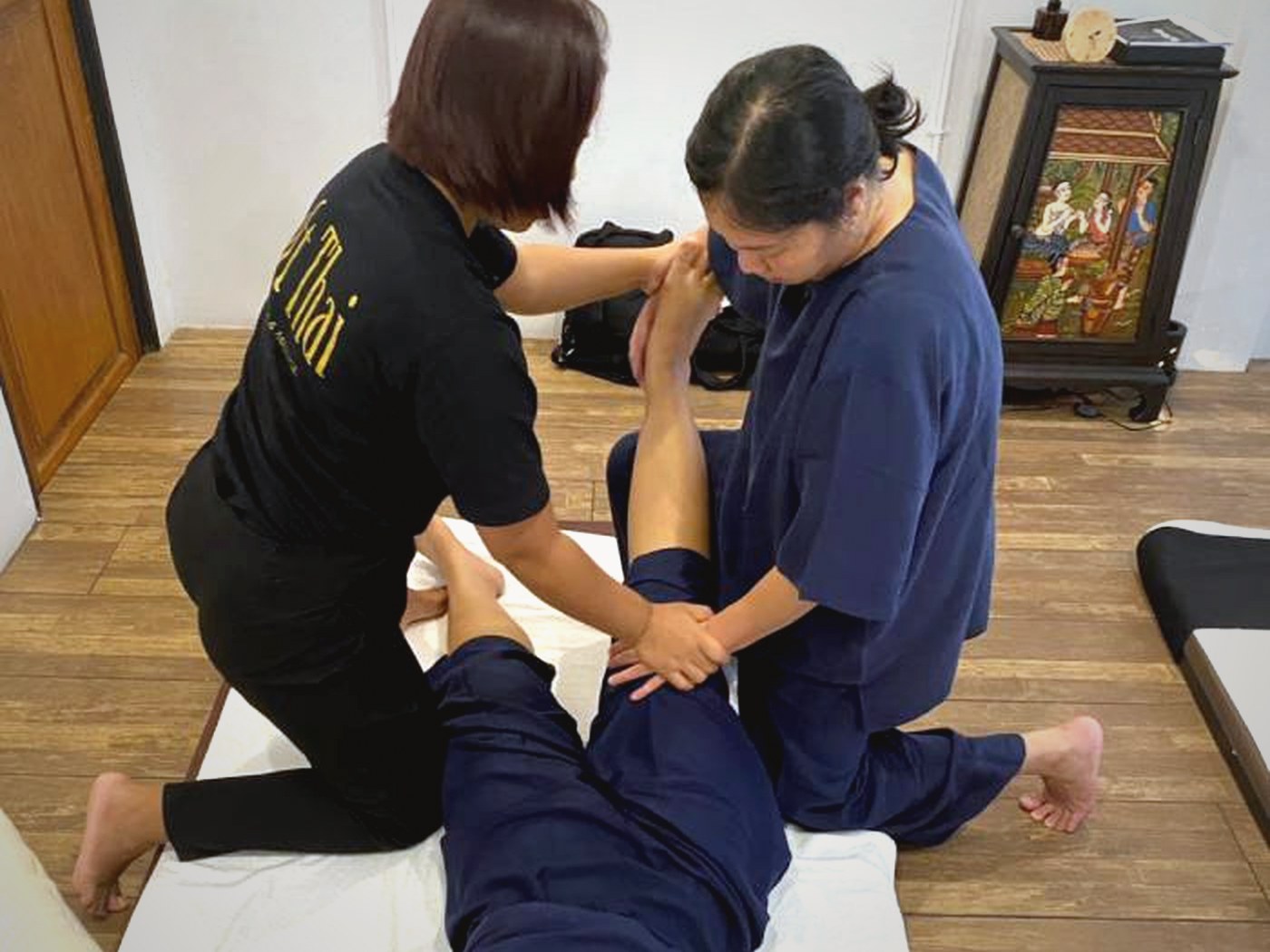
Real Thai Massage Training Photos, Professionally Normalized.
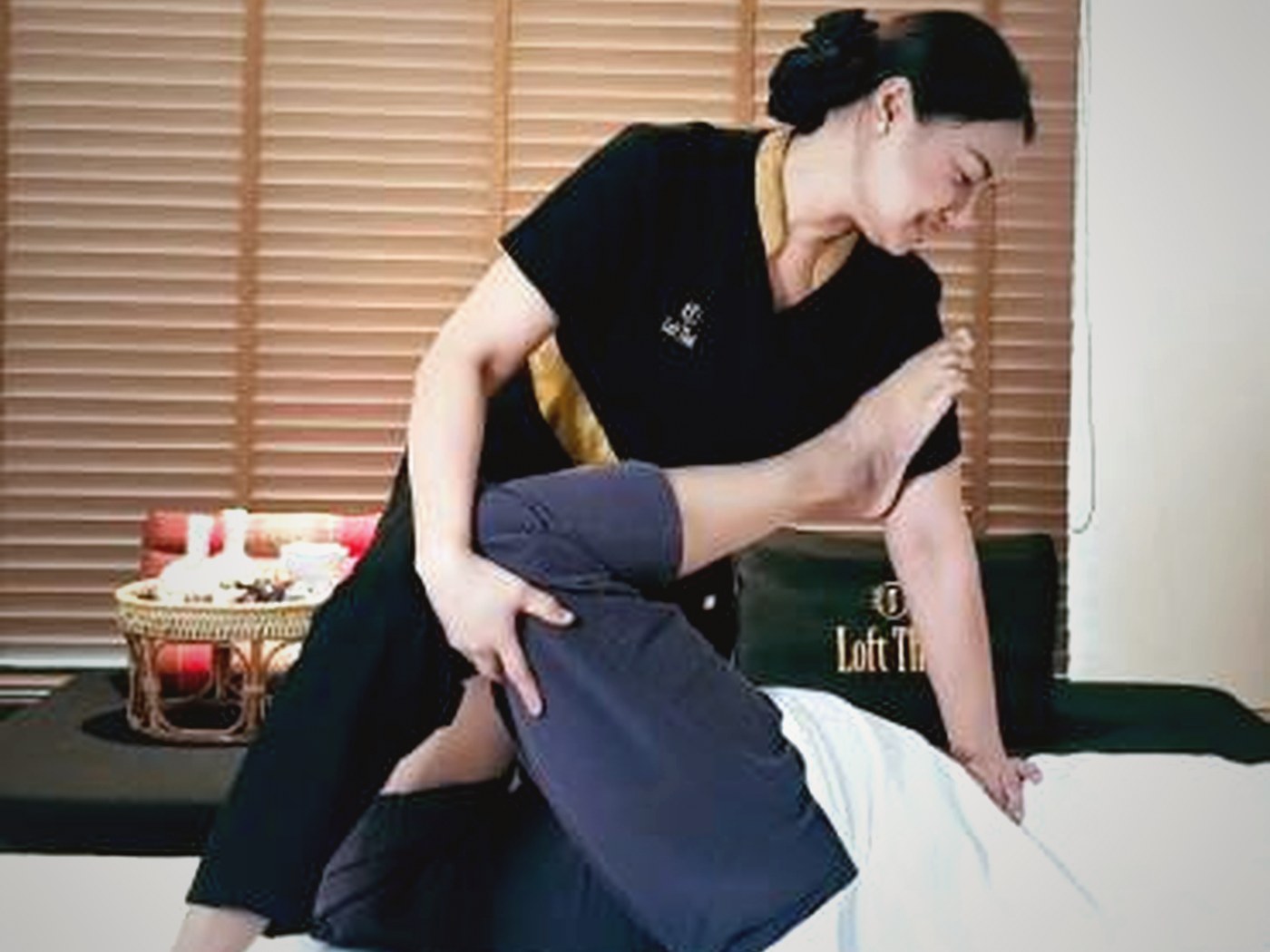
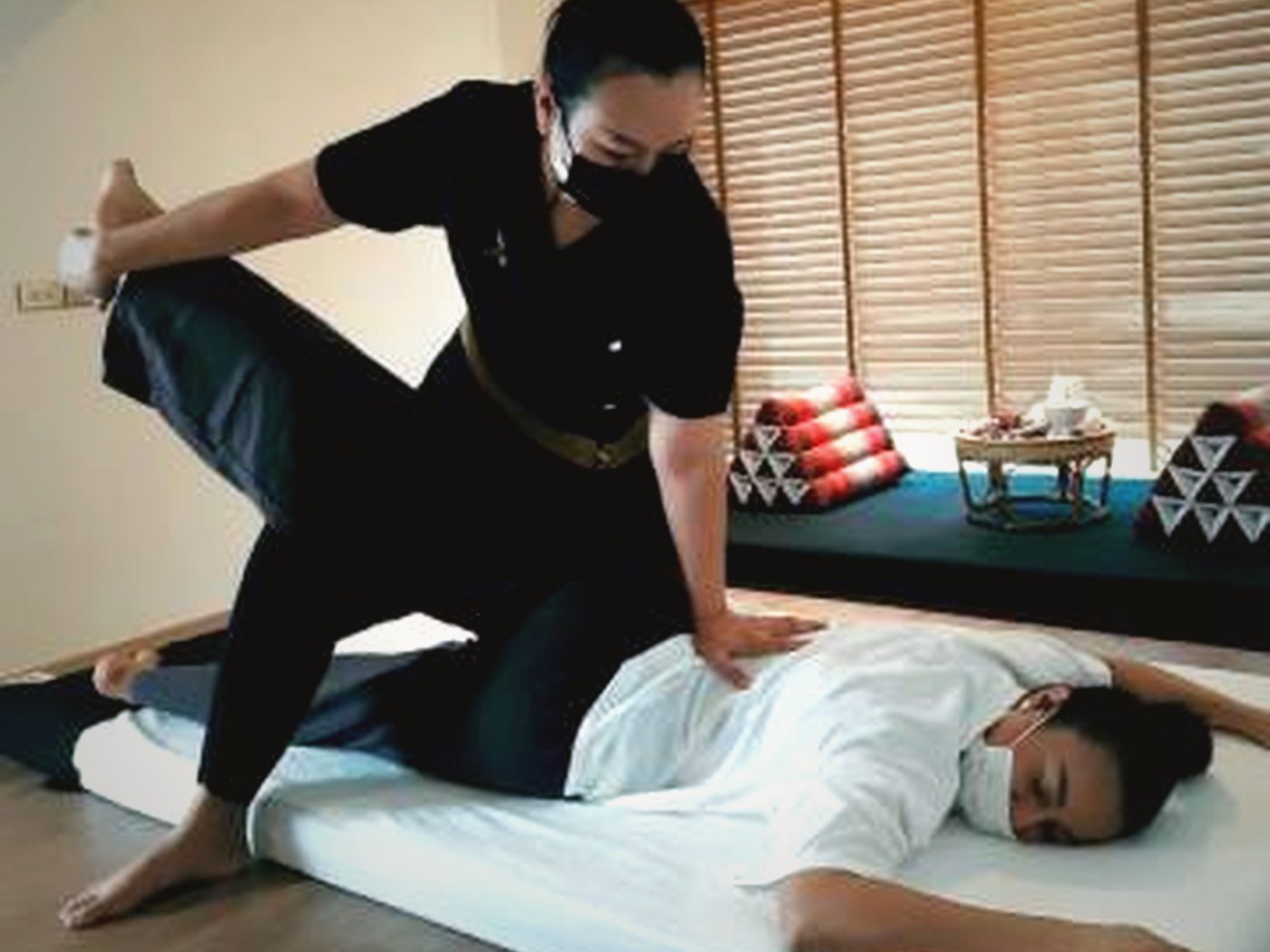
These images are taken from the existing Thai Massage School Bangkok material and Nuad Thai School training gallery, then processed with the same warm professional grade, lighting balance and subtle film grain for a consistent page style.
Thai massage is usually sought for relaxation, mobility and body awareness. Benefits vary from person to person, and massage should not replace medical care, but many people choose Thai massage because it combines deep bodywork with movement.
Mobility and flexibility
Assisted stretching can help the body explore range of motion in a supported way.
Muscle tension relief
Compression, rocking and pressure can reduce the feeling of stiffness in common tension areas.
Postural awareness
Thai massage helps many clients notice tight hips, shoulders, back patterns and breathing habits.
Relaxation response
The slow rhythm can settle the nervous system and create a calmer body state.
Circulation support
Alternating pressure and release may encourage a sense of warmth and improved flow.
Energy and body balance
In Thai tradition, work on Sen pathways is used to support energetic balance and whole-body harmony.
Styles
Different Types Of Thai Massage And Related Treatments.
Traditional Thai massageClothed, mat-based, oil-free, with pressure, assisted stretching and full-body sequencing.
Thai oil massageUses oil on the skin and blends Thai-inspired pressure with smoother spa massage strokes.
Herbal compress massageUses steamed herbal compresses to apply heat, aroma and pressure after warming the body.
Foot reflexology and Thai foot massageFocuses on feet and lower legs with pressure, stretching, towel work and reflexology-inspired points.
Thai warrior massageA stronger, athletic style inspired by deep pressure and powerful traditional body mechanics.
Safety
When Thai Massage Should Be Adapted Or Avoided.
Thai massage should feel intense only within a safe and agreed comfort range. More pain does not mean more benefit. A trained practitioner adapts pressure for age, mobility, pregnancy, injury history, inflammation, recent surgery, osteoporosis risk, cardiovascular conditions, acute pain and the client's emotional comfort.
Before a session, tell the therapist about injuries, medication, pregnancy, chronic conditions, recent procedures, dizziness, numbness or areas you do not want touched. During the session, communicate early if pressure is too strong or if a stretch feels sharp, unstable or alarming.
Ask for lighter pressure if the body guards or breath becomes tense.Avoid forced stretching, especially around knees, hips, neck and lower back.Choose trained therapists who understand contraindications and client consent.
Book promo
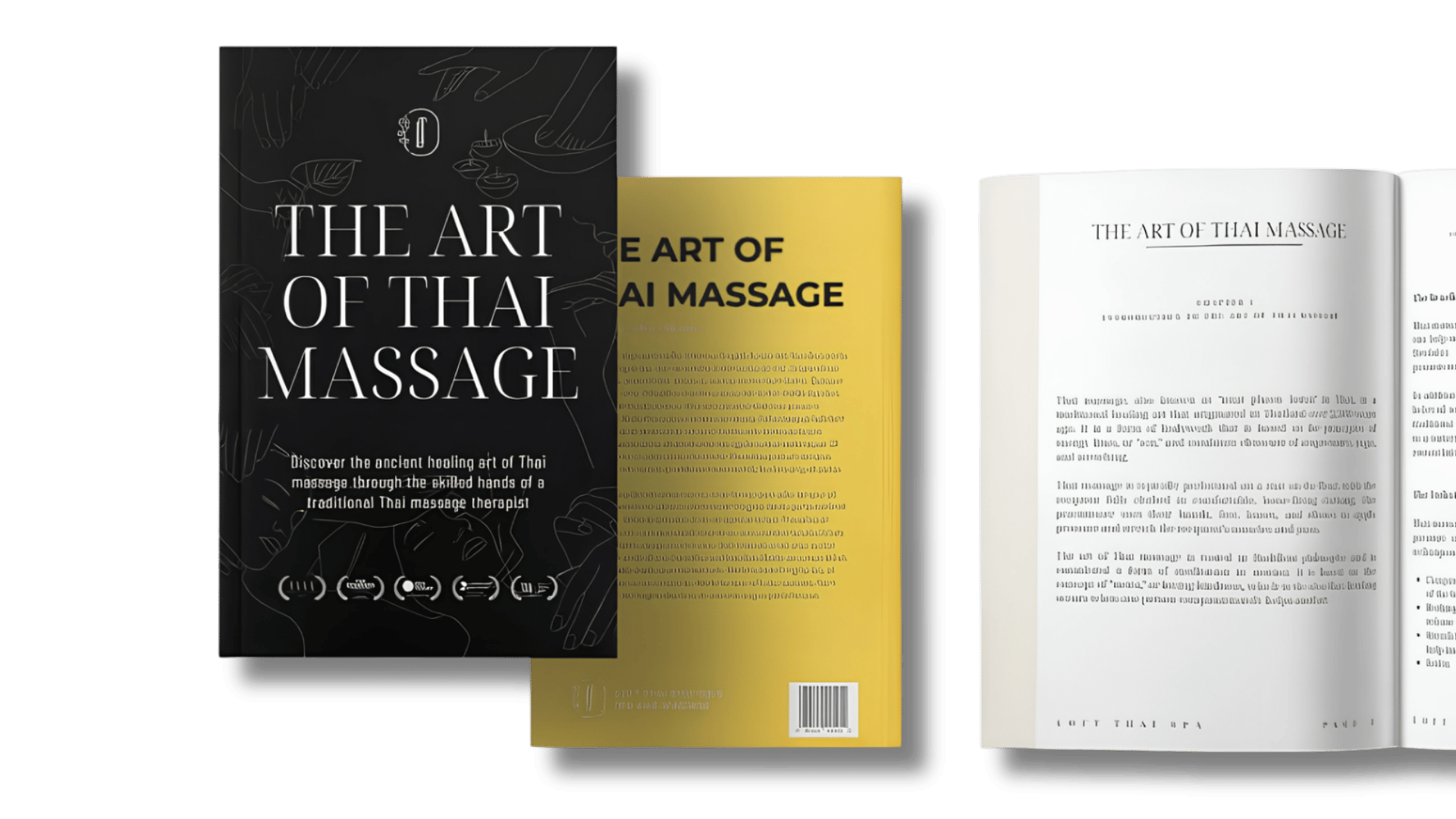
The Art Of Thai Massage
The Art Of Thai Massage is a learning companion for students who want to understand the foundations behind Nuad Thai before or after class. It introduces Thai massage culture, body mechanics, Sen line thinking, treatment flow and the professional mindset behind respectful bodywork.
Thai massage is a traditional bodywork practice where the receiver stays clothed while the therapist uses pressure, assisted stretching, rocking and joint movement to create a full-body treatment. It is usually performed on a mat and does not normally use oil.
Is Thai massage the same as deep tissue massage?
No. Thai massage can feel deep, but it is not the same as Western deep tissue massage. Thai massage uses body-weight pressure, stretching, movement and sequencing, while deep tissue massage usually focuses on slow pressure into specific soft tissue layers, often with oil on a table.
Why is Thai massage sometimes called assisted yoga?
Thai massage is sometimes compared with assisted yoga because the therapist guides the receiver into passive stretches and positions. However, it is also a massage system with compression, Sen line pressure, rocking, joint mobilization and traditional Thai medicine concepts.
Does Thai massage hurt?
Thai massage may feel intense, especially in tight areas, but it should not be painfully forced. Good Thai massage uses communication, gradual pressure and adaptation. Sharp pain, joint stress, numbness or panic are signs that the technique should be softened or stopped.
What should I wear for Thai massage?
Wear comfortable clothing that allows movement, such as loose pants and a soft shirt. Traditional Thai massage is usually performed clothed, so avoid rigid jeans, belts or anything that restricts hip, shoulder or knee movement.
Can beginners learn Thai massage?
Yes. Beginners can learn Thai massage when the course is structured carefully. A good beginner course starts with body mechanics, safe pressure, simple sequences, client communication and repeated supervised practice before moving into stronger or more complex techniques.