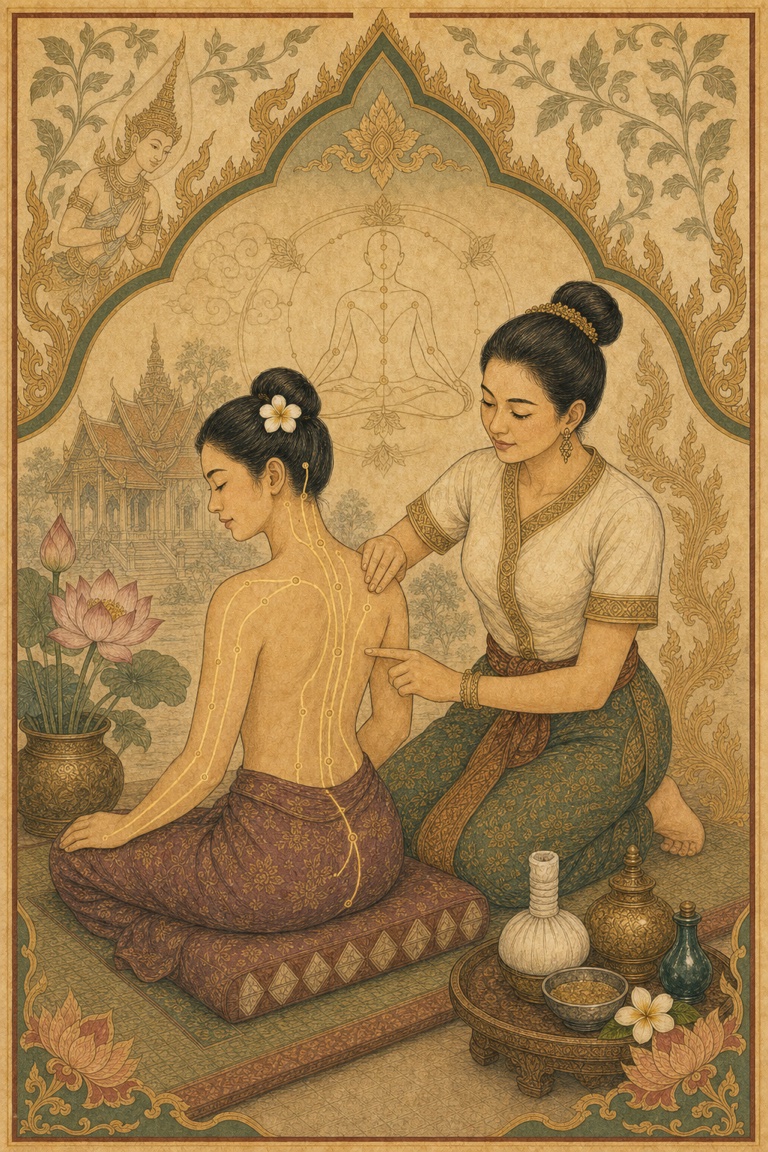
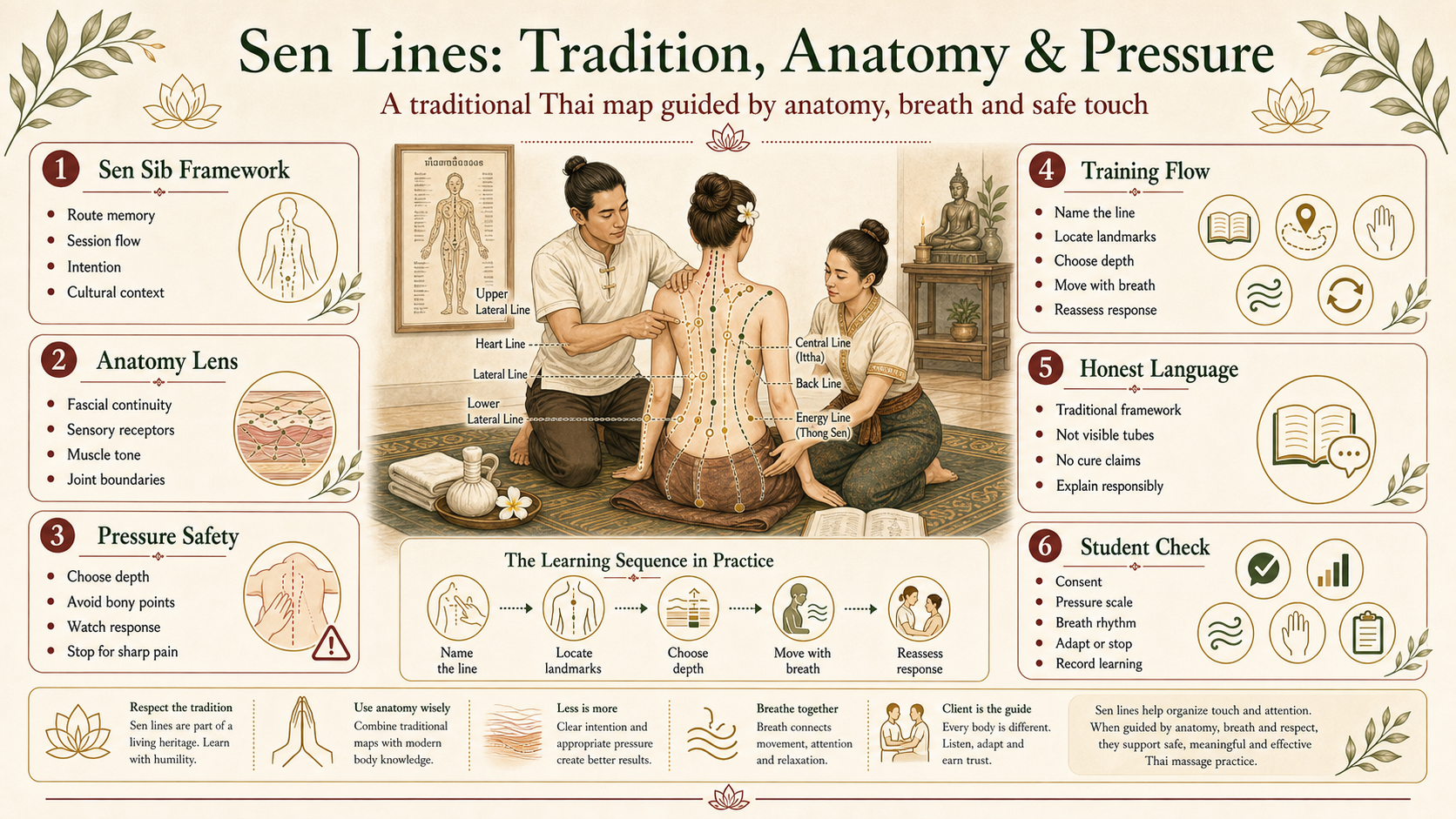
Sen Lines: Tradition, Anatomy and Pressure deserves more than a short list of benefits. This expanded guide looks at Sen lines as a traditional Thai map for organizing touch, movement and attention without confusing cultural language with anatomical literalism, with enough anatomy, history, safety and teaching context to help students and clients understand what is really happening during a session.
The goal is educational rather than promotional. Massage can be deeply restorative, but good training also teaches limits: when to reduce pressure, when to modify a position, when to avoid a technique and when a client should seek medical advice.
Why This Topic Matters
The practical value of this topic is that it connects touch with judgment. In a school environment, students learn that the same technique can feel caring, useless or unsafe depending on pressure, angle, timing, consent and the receiver’s condition. This is why Nuad Thai training must combine culture, anatomy and supervised repetition.
Seen through that lens, Sen lines as a traditional Thai map for organizing touch, movement and attention without confusing cultural language with anatomical literalism becomes a disciplined practice. The therapist is not chasing intensity. The therapist is listening with the hands, watching breath and adjusting to the body in front of them.
Historical and Cultural Context
In Thai massage education, Sen lines carry history and clinical memory. They help therapists organize sequences and intention, much as meridians or fascial lines help other traditions describe continuity.
UNESCO recognition of Nuad Thai as intangible cultural heritage is useful because it reminds readers that Thai massage is not a random spa trend. It is a living practice shaped by Thai healthcare culture, community transmission, formal schools and modern wellness settings.
Anatomy and Physiology Explained Simply
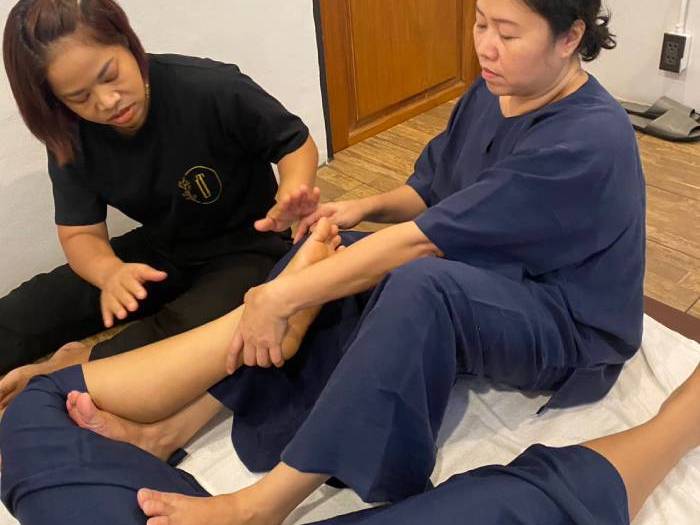
Modern anatomy does not prove Sen lines as visible tubes, but it does show continuous fascial layers, sensory receptors and mechanical relationships across the body. A good teacher can respect both languages.
For students, anatomy should never become cold memorization. It should answer practical questions: Where can I press safely? Which direction respects the joint? Why does this client guard here? Which structures require lighter touch? When anatomy is connected to a real technique, the learning becomes durable.
| Focus area | Anatomy or learning point | Teaching cue |
|---|---|---|
| Sen Sib framework | Traditional route memory | Organizes session flow |
| Fascial continuity | Connective tissue layers | Explains why distant areas can feel related |
| Pressure points | Sensory nerves and muscle tone | Requires dose control |
| Breath and rhythm | Autonomic regulation | Makes touch safer and easier to receive |
Technique, Pressure and Professional Touch
Students should use Sen lines to guide pressure direction and sequencing, then use anatomy to choose safe depth and avoid vulnerable structures.
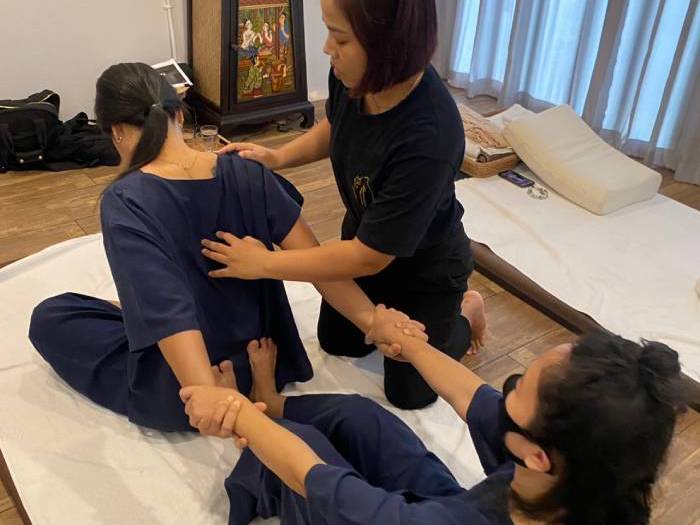
Professional touch has three qualities: it is clear, graded and reversible. Clear means the receiver understands where the contact is going. Graded means the therapist can move from light to moderate pressure without surprise. Reversible means the technique can stop immediately if the receiver needs a change.
Training Flow
The following process is a simple way to teach the topic without turning it into a memorized checklist. Each step gives the student a reason to slow down and observe.
Safety, Contraindications and Honest Claims
Avoid presenting Sen work as a guaranteed cure. Use it as a traditional framework for wellness, mobility and relaxation, while staying alert to pain, numbness, swelling and medical red flags.
This language is also important for reader trust. Students benefit from pages that are specific, useful and responsible. A responsible massage article should cite recognized sources, avoid miracle claims and explain how the technique is adapted for different bodies.
How Students Can Apply This at Nuad Thai School
In a practical class, the teacher can turn this topic into a sequence of observation, demonstration, partner practice, correction and reflection. The student should both give and receive the technique, because receiving teaches comfort, pressure tolerance and empathy in a way that theory cannot.
The best classroom outcome is not a student who performs the biggest stretch or the deepest pressure. It is a student who can adapt, explain, reassure and stop at the right moment. That is the difference between a memorized routine and professional bodywork education.
Clinical Reasoning for Students
One of the most important upgrades in a serious article on Sen lines as a traditional Thai map for organizing touch, movement and attention without confusing cultural language with anatomical literalism is clinical reasoning. A therapist does not simply ask, 'Which technique comes next?' The better question is, 'What is this client asking for, what does the body allow today, and what is outside my scope?' That reasoning protects the client and also protects the tradition from being reduced to a list of tricks.
In practice, this means every sequence should include observation, a pressure scale, a check for contraindications and a clear exit option. When a client reports sharp pain, numbness, fever, unexplained swelling or recent injury, the correct professional response is not to push through. It is to pause, adapt or refer. This is why the WHO training benchmark language is useful for schools: it treats Nuad Thai as teachable professional competence, not as improvisation.
Anatomy Notes Worth Remembering
For this topic, the anatomical priority is Modern anatomy does not prove Sen lines as visible tubes, but it does show continuous fascial layers, sensory receptors and mechanical relationships across the body. A good teacher can respect both languages. A student should be able to point to the relevant region, name the vulnerable structures nearby and explain why the chosen pressure is appropriate. The body is layered: skin, superficial fascia, deeper fascia, muscle, joint capsule, blood vessels, lymphatic vessels and nerves all respond differently.
Fascia is especially important for massage education because it forms continuous connective layers. This does not mean every traditional concept must be translated into a modern anatomical claim. It means students can use anatomical knowledge to refine traditional maps, dose pressure more intelligently and explain client sensations without exaggeration.
How to Teach the Technique Without Overloading the Learner
A good instructor introduces Students should use Sen lines to guide pressure direction and sequencing, then use anatomy to choose safe depth and avoid vulnerable structures. slowly. First the student watches the whole movement. Then they practice the therapist posture without pressure. Only after that should they add body weight, rhythm and client feedback. This sequence prevents beginners from using thumb strength or leaning into joints before they understand alignment.
The correction should be concrete: move the knee closer, soften the elbow, widen the hand, slow the breath, reduce the angle, ask the receiver again. These small cues create professional touch. They also make the class feel safer for students who may be nervous about touching or being touched.
Medical Caution and Scope of Practice
The safe boundary is simple: Avoid presenting Sen work as a guaranteed cure. Use it as a traditional framework for wellness, mobility and relaxation, while staying alert to pain, numbness, swelling and medical red flags. Massage education can discuss anatomy, physiology and wellness, but it should not diagnose disease or promise treatment outcomes. This is especially important online, where exaggerated claims can damage trust and create risk for clients.
A professional article should therefore use careful language. It can say that massage may support relaxation, comfort, body awareness and mobility for some people. It should avoid saying that it cures medical conditions. When the article names a health topic, it should also name referral logic and encourage readers with medical concerns to consult a qualified health professional.
What This Means Inside a Nuad Thai School Classroom
In the classroom, Sen lines as a traditional Thai map for organizing touch, movement and attention without confusing cultural language with anatomical literalism becomes a practical training module. Students learn to prepare the space, explain the goal, demonstrate respectful contact, practice slowly and receive correction. The teacher’s role is not only to show a beautiful technique; it is to build judgment, humility and repeatable safety.
This is also where culture matters. Nuad Thai is a Thai practice with its own history, etiquette and values. When international students learn it in Bangkok, they are not only buying a skill. They are entering a living tradition. The best outcome is a graduate who can carry the practice abroad with respect, accuracy and restraint.
A Simple Student Self-Assessment
After practicing this topic, students can review five questions: Did I ask for consent clearly? Did I avoid vulnerable structures? Did I use body weight rather than force? Did I notice the receiver’s breathing and facial expression? Did I know when to stop or modify? These questions are simple, but they separate safe practice from performance.
The same checklist can be used by couples, spa therapists and advanced students. It keeps the focus on care rather than showmanship. It also helps articles remain useful after the first reading, because the reader leaves with a practical way to judge their own learning.
Conclusion
Sen Lines: Tradition, Anatomy and Pressure is stronger when it is taught with context. History gives the practice roots, anatomy gives it precision, safety gives it credibility and supervised repetition gives it professional quality.
For readers comparing schools or planning training in Bangkok, this is the standard to look for: beautiful technique, yes, but also careful education, clear sources, cultural respect and a teacher who can explain why every movement matters.