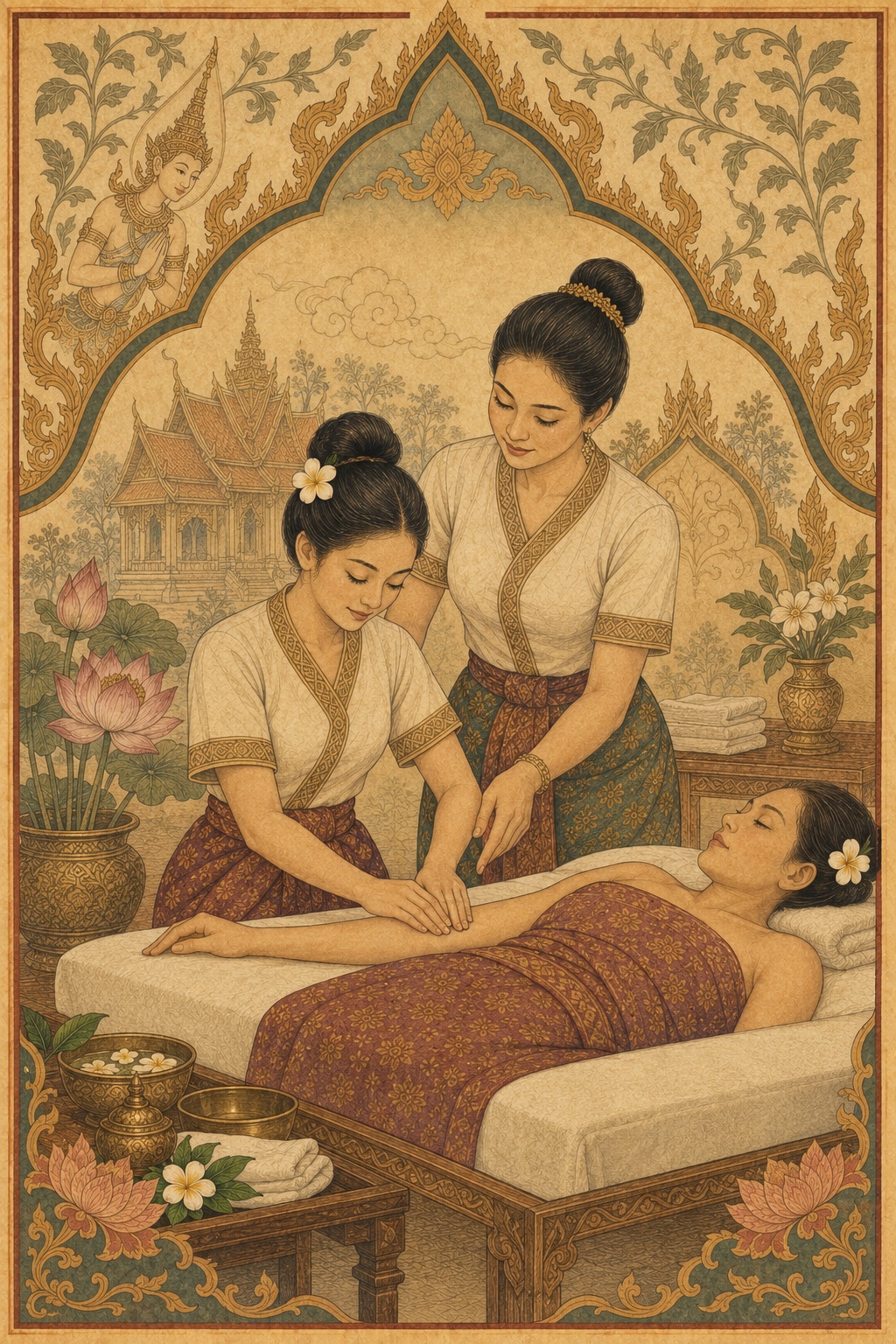
Clients sometimes ask whether lymphatic massage removes toxins, treats swelling or improves immunity. Spa students need a clear answer: describe the gentle technique and its comfort goals, explain its limits, and refer symptoms that require medical assessment.
In the Private Lymphatic Drainage Massage Course, students can practise light contact, slow rhythm and client communication under supervision. A classroom session is not a diagnosis or a prescription for unexplained swelling.
Key Takeaways
- The main training path is the Private Lymphatic Drainage Massage Course.
- Good massage education explains what the therapist does, which tissues are involved, why pressure is adapted and when a technique should be avoided.
- Medical, anatomical and scientific vocabulary is used for education only, not to diagnose or promise treatment outcomes.
- Direct source links and clear safety boundaries make the article suitable for serious professional learning.
Research Context and Why It Matters
The references below serve different purposes. StatPearls explains anatomy and physiology; ACOG provides patient guidance on blood clots; NCCIH summarises massage research and safety. None establishes a guaranteed benefit for the school's particular training sequence.
General research on massage cannot automatically support a claim about lymphatic drainage. The technique, patient population and outcome studied must match the claim being made. A partner's service description also cannot replace independent clinical evidence.
Anatomy and Physiology
For this subject, the anatomical focus is lymph capillaries, superficial collectors, regional nodes, fluid balance, skin movement and venous warning signs. A student should be able to identify the relevant region, explain why the pressure is light or deep, and name the structures that require caution.
Anatomy helps students avoid vague routines. Instead of memorizing movements, they learn to ask: where is the contact, what is the tissue response, what does the client report, and what should change if discomfort appears?
Technique and Classroom Method
The practical technique focus is medical-history screening, feather-light skin stretch, proximal preparation, pathway sequencing and slow rhythmic finishing. In class, this should be demonstrated slowly, practiced under correction and repeated until the student can keep posture, rhythm and pressure consistent.
Instructors should demonstrate the details that students can overlook: stance, breath, angle, towel management, consent, pressure scale and the ability to stop immediately.
Step-by-Step Training Protocol
Students should first rehearse this sequence in order. The goal is not speed: each checkpoint must be completed, explained and accepted before the next stage begins.
- Screen. Clarify swelling history, infection and clotting risk.
- Map. Identify superficial pathways and regional nodes.
- Prepare. Begin proximally with calm light contact.
- Drain. Use slow skin stretch rather than deep pressure.
- Recheck. Monitor swelling, comfort and skin response.
- Refer. Escalate unexplained or medically concerning edema.
During assessment, the student should be able to explain the purpose of each step, prepare the required materials, communicate with the client and decide when to continue, modify or stop. The instructor can then evaluate both manual technique and professional judgment rather than movement recall alone.
Equipment, Hygiene and Record-Keeping
Professional practice includes everything that happens before and after hands-on technique. Equipment condition, clean handling and accurate records are part of the treatment, not administrative extras.
- Prepare a clean table, fresh linens and positioning supports that allow light work without strain or unnecessary product use.
- Clean supports and contact surfaces between clients and keep assessment tools simple, clean and non-diagnostic.
- Document screening, swelling context, pressure adaptations, areas avoided and any referral required before treatment.
Students should follow the equipment manufacturer's instructions and the hygiene rules that apply where they practise. When a tool cannot be cleaned reliably, is damaged or cannot be identified as clean, it should not return to service.
Complete Infographic
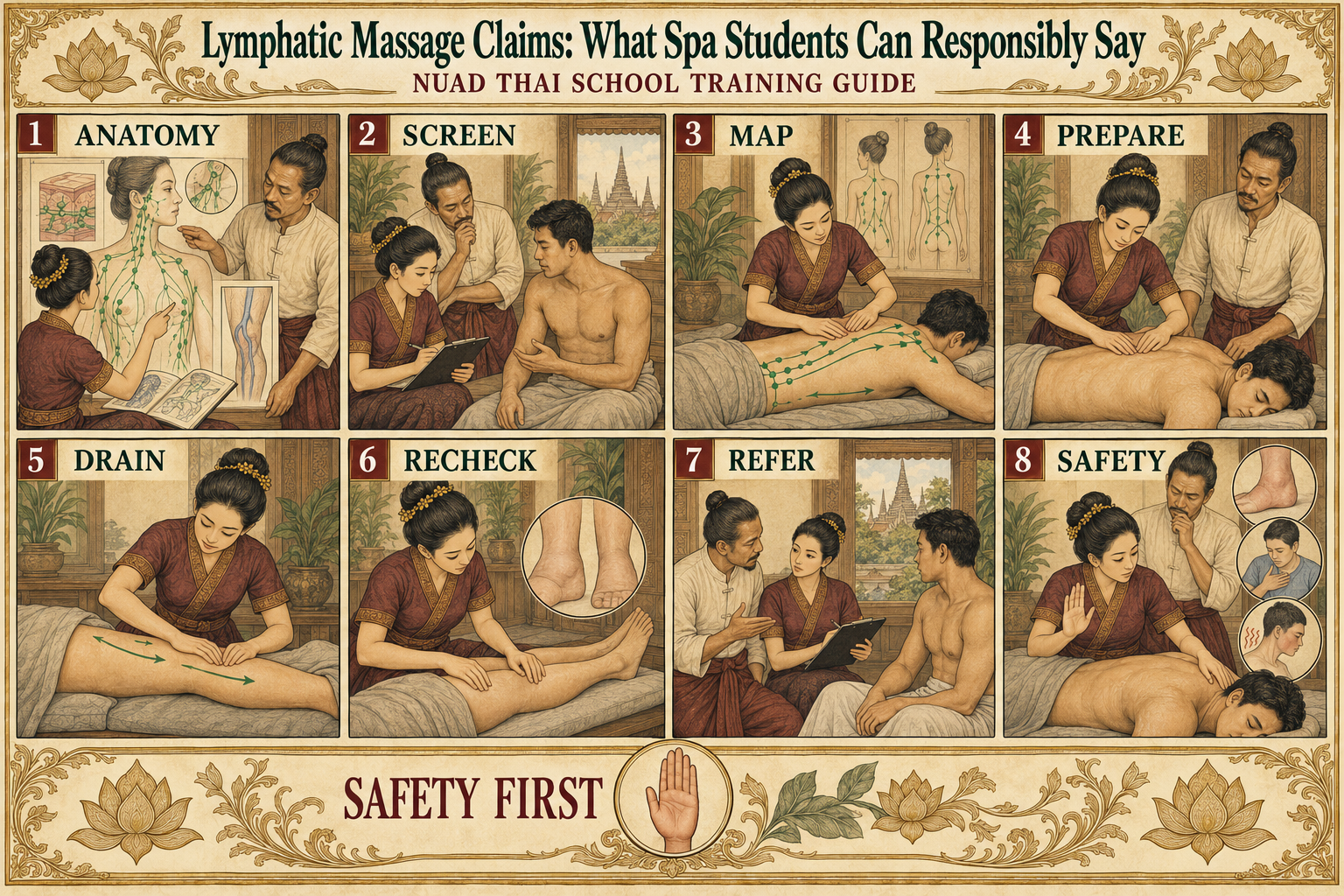
Professional Decision Matrix
| Layer | What to cover | Training cue |
|---|---|---|
| Anatomy | lymph capillaries, superficial collectors, regional nodes, fluid balance, skin movement and venous warning signs | Name the tissues and vulnerable structures before choosing pressure. |
| Technique | medical-history screening, feather-light skin stretch, proximal preparation, pathway sequencing and slow rhythmic finishing | Teach movement slowly, then add rhythm and feedback. |
| Safety | avoid suspected clotting, acute infection, unexplained swelling, uncontrolled cardiac or renal concerns and detoxification claims | Modify, stop or refer when the client's condition requires it. |
| Course path | Private Lymphatic Drainage Massage Course | Connect the topic to supervised practice in the related course. |
Safety, Contraindications and Scope
The safety focus is clear: avoid suspected clotting, acute infection, unexplained swelling, uncontrolled cardiac or renal concerns and detoxification claims. A suspected clot, acute infection or unexplained swelling requires medical assessment before massage.
Massage education can discuss anatomy, physiology, relaxation, mobility and comfort. It should not claim to cure disease. Readers with medical symptoms should consult qualified health professionals, and students should learn referral logic early.
Professional Practice and Partner Context
Loft Thai Spa provides a useful professional-practice context for this topic. Nuad Thai School also documents how Loft Thai Spa standards became a Nuad Thai School training method, connecting classroom standards with real spa, wellness or product-development settings.
This partner example is included as a case study in professional practice. It is not independent clinical evidence and does not change the safety boundaries described in this article.
What Students Can Responsibly Say
Describe what will happen in the session before discussing possible benefits. For example: "We use gentle, slow contact and adjust to your comfort. We cannot promise to treat a medical condition." This is a description of practice, not a claim of proven effectiveness.
- Describe the technique: light skin movement, slow rhythm, respectful draping and ongoing feedback.
- Set the boundary: avoid promises of detoxification, boosted immunity, weight loss or guaranteed reduction of swelling.
- Explain uncertainty: a study of one massage technique or one patient group does not prove the same result for every spa client.
- Refer symptoms: do not label a new swelling as harmless or massage it to find out whether it improves.
ACOG lists sudden swelling, pain, warmth and redness among possible signs of a deep vein clot. Pause the session and seek prompt medical assessment if these are suspected. Sudden breathlessness or chest pain calls for emergency medical help. A massage student should recognise the need to stop, without attempting to diagnose the cause.
Related Training Paths
Nuad Thai School offers a complete catalog of specialist and professional training programs. For this topic, the most relevant study paths are:
- Private Lymphatic Drainage Massage Course - primary training path for this article.
- Private Facial Treatment Course - complementary skills and supervised practice.
- Private Prenatal Massage Course - complementary skills and supervised practice.
- Private Tok Sen Massage Course - complementary skills and supervised practice.
Reading establishes the theory. Supervised practice adds correction, repetition, body mechanics and the professional judgment required to adapt a session safely.
FAQ
Does a spa lymphatic massage session treat lymphoedema?
The spa training described here does not qualify a student to diagnose or manage lymphoedema. A client with diagnosed lymphoedema should follow their healthcare team's plan and seek a practitioner with appropriate specialist training.
Why include anatomy in a massage school blog article?
Anatomy helps students understand pressure, direction, contraindications and adaptation. It makes technique safer and more professional.
How is this topic connected to professional training?
It is anchored to the Private Lymphatic Drainage Massage Course and linked to complementary Nuad Thai School programs that develop related anatomy, technique, client communication and safety skills.