Thai massage is a practice of skilled, respectful touch. That is exactly why professional boundaries matter. The original version of this article explained that Thai massage can include a feeling of physical and emotional intimacy because the work happens through closeness, kindness and direct contact. This expanded guide keeps that idea, but develops it from the point of view of a school, a therapist, a couple learning together and a spa team serving real clients.
A client can say yes, pause, modify pressure, refuse a technique or end the session at any time.
Good boundaries do not make massage cold. They make the therapeutic relationship clearer, safer and more trustworthy.
Screening, draping, pressure choices, communication and referral decisions can be practiced in class before they become professional habits.
Why this subject belongs in a massage school
Professional Thai massage is not only a sequence of palm pressure, thumb work, stretches and transitions. It is a complete relationship between the person giving touch and the person receiving it. In that relationship, the therapist has skill, positional authority, anatomical knowledge and control over the rhythm of the session. The client is often lying down, relaxed, partially covered, uncertain about technique and sometimes emotionally vulnerable. This difference in roles is normal in bodywork, but it must be managed with discipline.
At Nuad Thai School's Professional Thai Massage Course, boundaries are treated as part of technique. A student who can perform a beautiful stretch but cannot ask for consent, read discomfort, protect privacy or adapt to a contraindication is not ready for professional work. The same is true for a spa therapist. The treatment may feel graceful from the outside, but the client experience depends on many invisible decisions: how the therapist explains the session, how pressure is negotiated, whether the client understands what will happen next, how the body is covered, what language is used and when the therapist decides not to perform a technique.
This is why consent and safety are not extra topics added at the end of training. They are the foundation under every movement. A respectful therapist does not rely on the client's silence. A respectful therapist checks, explains, observes and adapts. The most refined Thai massage feels calm because the boundaries are already clear.
From intimacy to professional boundaries
Massage can feel intimate because it uses touch, breath, stillness and physical proximity. In Thai massage, the therapist may work on a mat, use body weight, guide assisted stretches, stabilize the hips or shoulders, and move around the client's body. In oil massage or spa therapy, the work can include draping, skin contact and quieter room conditions. None of this is sexual when it is practiced professionally. It becomes therapeutic because the purpose, context, communication and limits are explicit.
The older article separated intimacy into physical intimacy and emotional intimacy. That distinction is still useful. Physical intimacy refers to the fact that the therapist works close to the body. Emotional intimacy refers to the trust, relaxation and openness that can appear when a person feels safe. The professional answer is not to deny these realities. The answer is to create a frame where they are understood, contained and respected.
A boundary is not only a rule against misconduct. It is a positive structure. It says: this is the purpose of the session, this is the technique we will use, this is how you can stop or modify it, these are the areas we will avoid, this is how your privacy is protected, this is how we respond if something feels uncomfortable. When boundaries are explained in this way, clients relax because they know what the relationship is for.
What consent means in Thai massage
Consent in massage is more than a booking confirmation. It is more than paying for a service. It is a continuous agreement about what touch is allowed, why it is being used, how much pressure is acceptable and whether the client wants to continue. Informed consent means the client understands the nature of the session before it begins. Ongoing consent means the therapist keeps checking during the session and does not treat silence as permission.
Before a session, consent includes practical information: the style of massage, clothing or draping expectations, the areas to be worked, possible stretches, pressure level, health conditions, injuries, pregnancy, medications, recent surgery and any emotional or cultural sensitivities. During the session, consent becomes smaller and more immediate: "Is this pressure comfortable?", "May I stretch your shoulder?", "Would you prefer less intensity?", "Do you want to skip this area?" After the session, consent includes feedback and documentation when the client wants future care.
Professional consent also means the client has the right to refuse. A person can consent to a Thai massage but refuse a certain stretch. They can ask for lighter pressure. They can stop a session even if they said yes earlier. They can keep more clothing on. They can ask questions. They can choose not to explain a personal reason. This right to modify or end treatment is central to ethical bodywork and is reflected in professional codes such as the NCBTMB Code of Ethics.
A professional consent flow for Thai massage
Style, purpose, clothing or draping, areas treated and the client's right to stop.
Injuries, pregnancy, surgery, fragile bones, blood clot risk, skin issues and medical referral needs.
Check pressure, stretching, sensitive zones and any movement that changes body position.
Breath, muscle guarding, facial tension, silence, withdrawal and verbal feedback all matter.
Give time to dress, offer water, document key notes and avoid personal or suggestive language.
Physical boundaries: clothing, draping, pressure and body zones
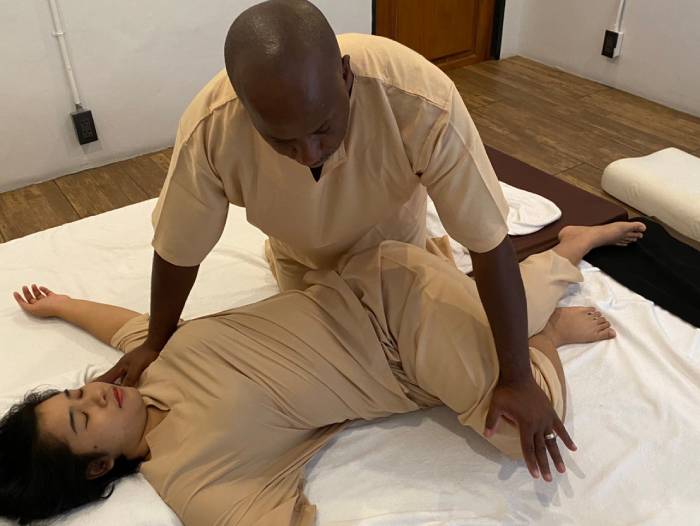
Physical boundaries begin before the therapist touches the client. In traditional Thai massage, clients are usually clothed in comfortable garments. This can make boundaries easier to understand because the work is performed over fabric on a mat. Still, a clothed session does not remove the need for consent. Assisted stretches, hip stabilization, pressure around the chest, abdomen, inner thigh, gluteal area or neck require clear professional judgment. The therapist should explain what is being done and avoid unnecessary contact.
In oil massage and spa treatments, draping becomes a major part of safety. Draping is not decoration. It protects privacy, warmth and dignity. A therapist should uncover only the area being worked, keep the rest of the body covered, and give the client private time to undress and dress. If the client is unsure about clothing, the therapist should explain the options clearly and neutrally, without pressure or embarrassment.
Pressure is another boundary. Strong pressure is not proof of skill. Some clients ask for deep pressure because they think pain means effectiveness, but professional therapists know that excessive force can create guarding, bruising, nerve irritation or injury. A better approach is to use a pressure scale, start gradually, and teach the client that discomfort is not the same as benefit. In Thai massage training, students learn to use body weight, angle and breath rather than forcing through the thumbs or elbows.
Some areas require special care. The neck is delicate. The abdomen can feel vulnerable and may be contraindicated for many clients. The chest, breast area, groin and gluteal region require strict boundaries and may be outside the scope of many spa sessions. If a technique is not necessary, clear or appropriate, it should be skipped. Professional restraint is a skill.
Emotional boundaries: trust is not dependency
Massage often helps people slow down. A client may arrive stressed, lonely, tired, anxious or disconnected from their body. They may relax deeply during the session. They may speak about personal experiences because the room feels quiet and supportive. This emotional opening is not a problem by itself. The therapist's responsibility is to keep the relationship professional.
Emotional boundaries mean the therapist listens without becoming a counselor, friend, romantic partner or rescuer. A massage therapist can be compassionate without inviting dependency. They can acknowledge a client's emotion without asking for unnecessary details. They can pause the session if a client becomes overwhelmed. They can refer to an appropriate health professional when the concern is outside massage scope. They can maintain warmth while avoiding personal disclosure that shifts attention away from the client's care.
This matters especially in professional training because students sometimes confuse kindness with over-involvement. A safe therapist is not distant, but they are steady. They do not flirt. They do not make suggestive jokes. They do not comment on the client's body in a way that objectifies it. They do not use a client's vulnerability to build personal intimacy. They keep the therapeutic relationship focused on the client's stated goals.
Safety begins before the first touch
Safety in Thai massage begins with intake. A therapist should ask enough questions to understand whether the session is appropriate. This does not mean diagnosing. It means recognizing when massage needs to be modified, postponed or referred. Red flags can include unexplained severe pain, fever, contagious skin conditions, recent surgery, suspected fracture, acute inflammation, blood clot risk, uncontrolled high blood pressure, certain neurological symptoms, pregnancy-related concerns and any condition the therapist is not trained to manage.
The National Center for Complementary and Integrative Health notes that massage therapy has low overall risk when performed appropriately, but rare serious adverse events have been reported, especially with vigorous techniques or clients at higher risk. For a school, this is a practical teaching point. Students must learn not only what to do, but when to do less.
In Thai massage, some techniques can look impressive: strong stretches, spinal movements, deep pressure lines, compressions with body weight, or rhythmic work around the neck and shoulders. A professional therapist asks whether the technique is necessary for this client today. Safety is not a loss of tradition. It is the way tradition survives responsibly in modern practice.
Professional principle: A therapist should never use surprise as a technique. If a movement changes the client's position, exposes a new body area, increases pressure, creates a stretch or enters a sensitive zone, explain first and receive consent.
How Nuad Thai School teaches boundaries as technique
Nuad Thai School teaches inside a real spa environment, which means students are not only learning choreography. They are learning client care. In the Private Thai Massage Course, beginners can focus on fundamentals, comfort and clear communication. In the Professional Thai Massage Course, the same ideas become career standards: intake, body mechanics, pressure adaptation, sequence design, therapist posture, contraindications and professional language. The Nuad Thai School method connects demonstration, supervised repetition and correction so that ethical habits become part of the student's hands.
For example, when a student learns a side-lying stretch, the instructor can correct knee placement, hand position and leverage. But the instructor also corrects the words around the movement: how to ask, how to give the client an exit, how to notice resistance, how to slow down and how to stop. When students practice on each other, they also experience the receiver's perspective. They learn how vulnerable a position can feel and why clear communication makes a technique safer.
This is also why class culture matters. Students should not laugh at a receiver's body, push beyond a partner's feedback, compete for the strongest pressure or treat pain as a sign of success. The classroom should model the professional treatment room. Respect is rehearsed until it becomes natural.
Couples massage: consent is the lesson, not an accessory
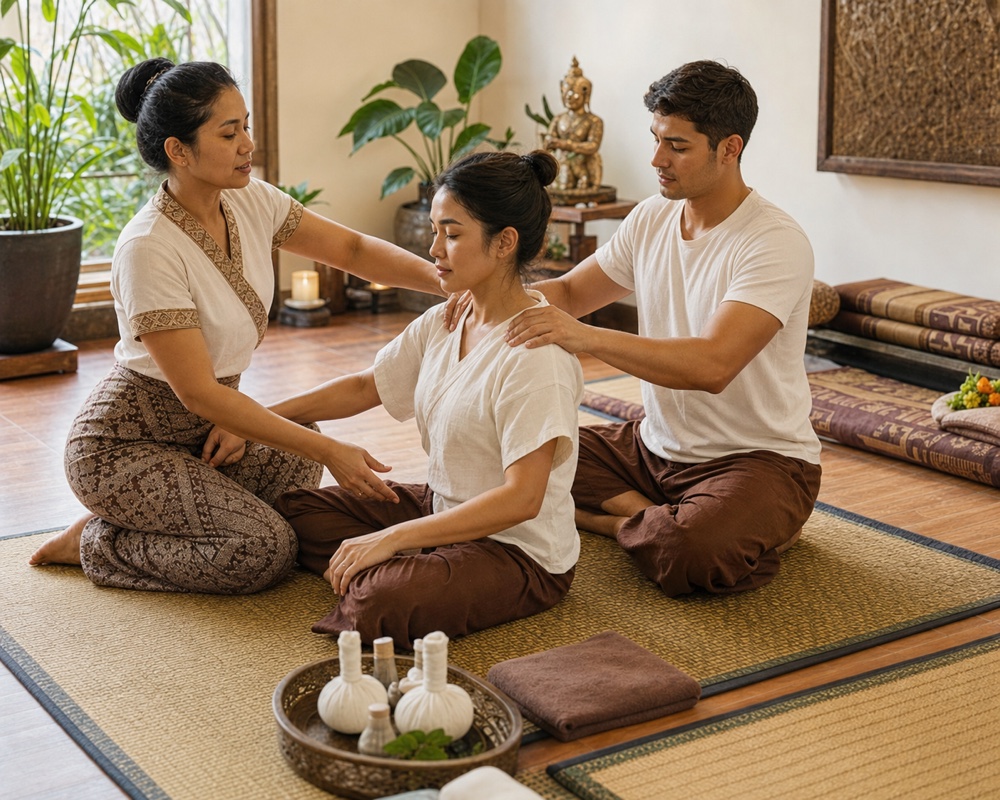
Couples massage can be beautiful when it is taught properly. In the Couples Massage Workshop in Bangkok, partners, close friends or couples learn safe touch together with an instructor. This is not the same as a professional client-therapist relationship, but consent still matters. In fact, couples often need even clearer language because familiarity can create assumptions. A partner may think, "I know what you like," while the receiver may feel pressure to accept touch that is too strong, too long or too emotionally loaded.
Our couples workshop turns this into a practical skill. Partners learn to ask before beginning, use a simple pressure scale, check comfort, avoid vulnerable areas, stop without taking it personally, and close the practice with care. The goal is connection, not performance. A good home routine should feel safe for both people: the giver should not strain their body, and the receiver should not feel trapped by politeness.
This is one reason the couples page belongs naturally in this topic. Couples therapy through massage is not only romantic. It can be educational. It teaches attention, patience, nervous-system calm and respectful touch. When couples learn with a professional instructor, they also learn what not to do: no surprise pressure, no forced stretching, no joking about pain, no touch when one person is tired, irritated or not fully consenting. Safe intimacy is chosen, not assumed.
Loft Thai Spa: why real salon practice matters
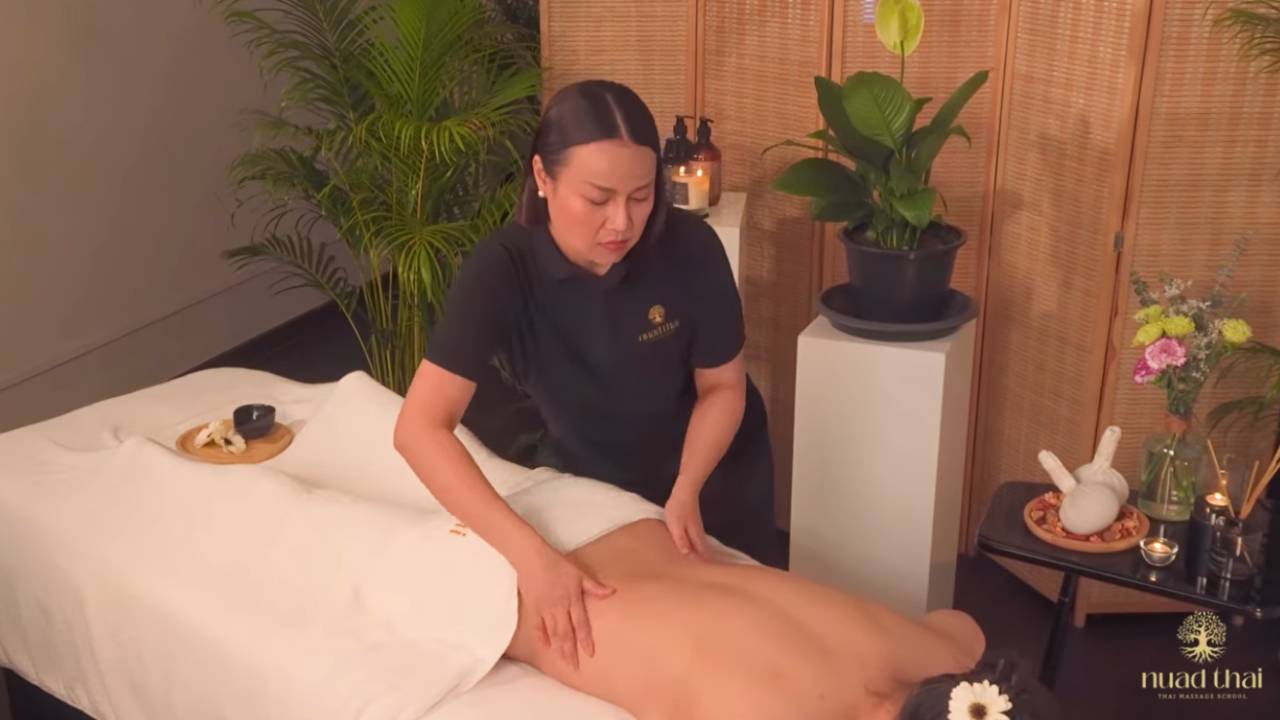
Nuad Thai School is operated with the practical influence of Loft Thai Spa. That connection matters because professional boundaries are tested in daily service, not only in theory. A busy spa has international clients, different body types, different expectations, different cultural ideas about privacy and different levels of massage experience. A therapist must deliver a consistent standard even when the client asks for something unclear, arrives with pain, wants very strong pressure or misunderstands what Thai massage includes.
Loft Thai Spa gives the school a living reference for these situations. Students can understand how a professional treatment room is prepared, how welcome rituals are kept respectful, how the therapist explains a treatment, how privacy is protected, how pressure preference is handled, how a session closes and how a therapist remains warm without crossing into personal intimacy. The salon experience shows that boundaries are part of luxury. A premium spa is not defined only by design, scent or music. It is defined by the client's feeling of being listened to and protected.
This also helps students who want to work internationally. Standards differ from country to country, but the underlying principles travel well: informed consent, privacy, hygiene, scope of practice, safe pressure, documentation, referral awareness and zero tolerance for sexualized behavior. A therapist who learns these principles can represent Thai massage with confidence and dignity.
Professional red flags and how to respond
Boundary problems often begin subtly. A client may make a sexual joke, ask for an inappropriate area to be massaged, request no draping, comment on the therapist's body, refuse to follow instructions, or pressure the therapist for a personal relationship. A therapist may also be tempted to over-share, accept inappropriate gifts, ignore discomfort because the schedule is full, or continue a technique after the client becomes quiet and tense. Training should name these moments clearly.
The professional response is simple but not always easy: pause, clarify, redirect or end the session. If a client sexualizes the session, the therapist should interrupt the work and restate the therapeutic purpose. If the behavior continues, the session should end. If the therapist feels unsafe, they should leave the room and follow the spa or school policy. If a client reports misconduct, the organization should treat the report seriously and document it through an appropriate complaint process.
Professional boundaries also protect therapists. Therapists have the right to refuse treatment that is unsafe, outside scope, abusive or inconsistent with professional standards. A school should teach students that saying no is not rude when the purpose is safety. The best therapists are not people who accept every request. They are people who know how to protect the work.
What students should be able to demonstrate
| Competency | What it looks like | Why it matters |
|---|---|---|
| Informed consent | Explain the session style, clothing or draping, pressure options and right to stop. | The client understands the frame before touch begins. |
| Ongoing consent | Ask before new techniques, sensitive zones, stretches or pressure increases. | Consent remains alive throughout the session. |
| Safe pressure | Use body weight, gradual entry, feedback and adaptation instead of force. | Technique becomes effective without unnecessary risk. |
| Privacy | Give private changing time, proper draping and neutral professional language. | The client keeps dignity and control. |
| Referral awareness | Recognize symptoms or conditions that need medical advice before massage. | The therapist stays inside scope and protects the client. |
How this applies across our courses and treatments
In Thai massage, boundaries often focus on assisted stretches, mat positions and clothed pressure. In Aroma Oil Massage training, they include draping, product sensitivity, skin exposure and slower communication. In Prenatal Massage training, they include positioning, medical referral awareness and extra caution around pressure. In sport, deep tissue or office syndrome work, they include the difference between therapeutic intensity and unsafe force. In facial treatment, they include hygiene, product explanation and the vulnerability of the face and head.
The common thread is professional reasoning. A technique is never separate from the person receiving it. The therapist must ask: Who is in front of me? What is the goal today? What is safe? What has the client agreed to? What should I avoid? What should I explain again? These questions turn massage from a memorized sequence into responsible practice.
Learn Thai massage with professional standards
Students who want to work safely need more than movements. They need supervised correction, consent language, pressure control, client-care habits and a real understanding of where professional touch begins and ends.
For clients: what a safe Thai massage should feel like
A safe Thai massage should feel clear before it feels deep. You should know what type of session you booked, what clothing or draping is expected, which areas will be treated and how to ask for a change. You should feel free to say "lighter", "stop", "not there", "can you explain?" or "I prefer a different position." A professional therapist will not be offended by these words. They will welcome them because feedback makes the session better.
You should also feel that the room supports privacy. The therapist should give you time to prepare, avoid unnecessary exposure, use respectful language and keep the session focused on your wellness goal. If something feels sexualized, confusing or unsafe, you can stop the session and report it to the spa, school or appropriate authority. Consent is not a one-time signature. It is your ongoing right.
For therapists: the standard is higher because touch is powerful
Thai massage has cultural depth, beauty and practical value. UNESCO recognizes Nuad Thai as part of the art, science and culture of traditional Thai healthcare, and the World Health Organization has published training benchmarks for Nuad Thai. This recognition creates responsibility. When a tradition becomes globally known, schools and therapists must protect it from poor practice, unsafe technique and inappropriate behavior.
For therapists, the message is direct: your hands carry trust. Every session is an opportunity to show that Thai massage can be precise, caring and ethical. The more skilled you become, the more careful you should become. Professional boundaries are not the opposite of warmth. They are the structure that allows warmth to be safe.
How real spa standards become a teachable massage education method.
Couples Safe touch and connectionA practical guide to couples massage, anatomy, consent and home practice.
Training Why licensed trainers matterTrainer quality, supervision, ethics and why safe massage education depends on feedback.
References and professional reading
- World Health Organization: Benchmarks for training in Nuad Thai.
- UNESCO: Nuad Thai, traditional Thai massage.
- NCCIH: Massage Therapy - What You Need To Know.
- NCBTMB Code of Ethics and NCBTMB Standards of Practice.
- FSMTB Model Massage Therapy Practice Act.
- Thailand PRD: Ministry of Public Health guidelines for traditional Thai massage standards.