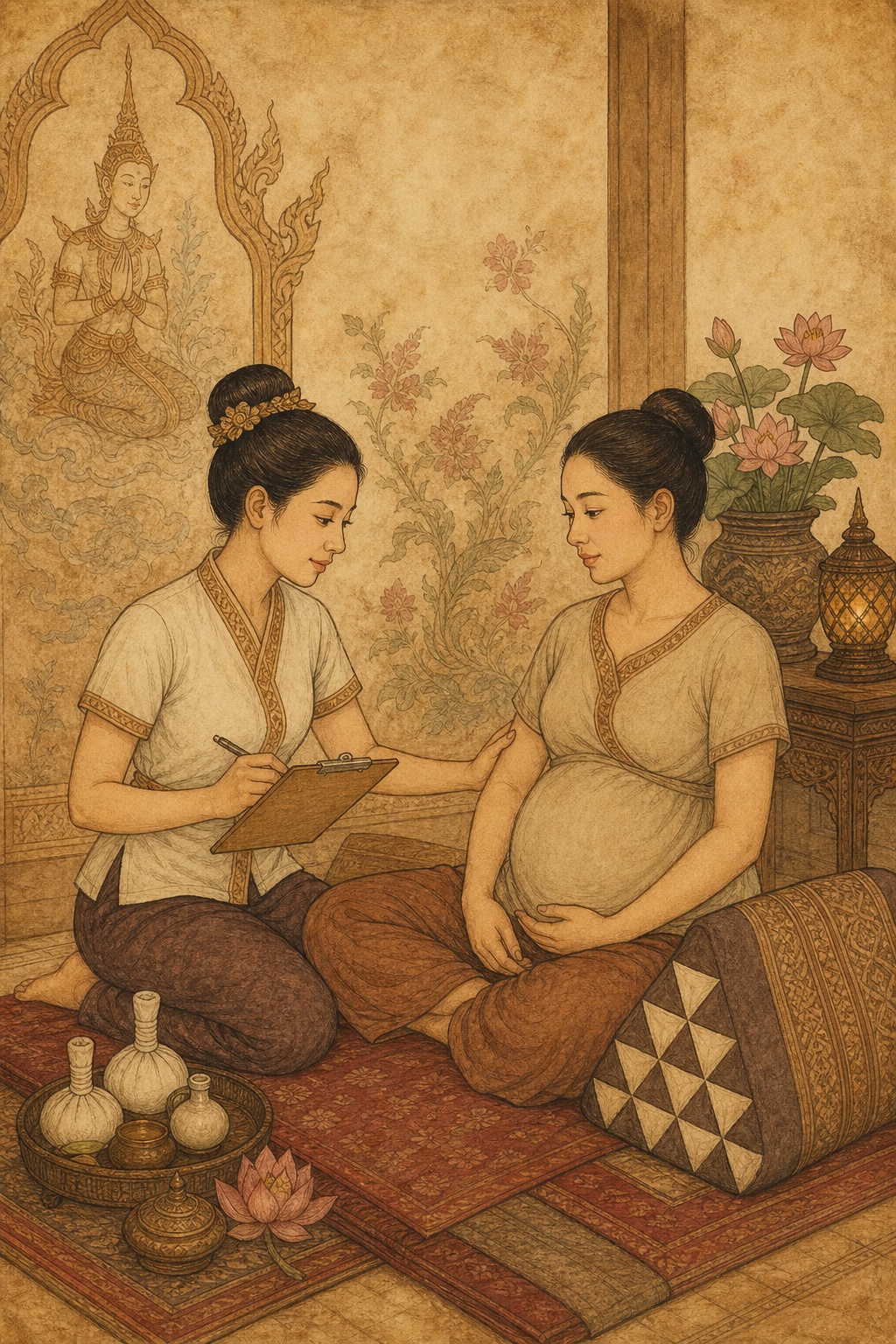
Advanced Prenatal Massage Assessment, Safety and Contraindications is part of a five-article advanced prenatal massage course outline for Nuad Thai School. It turns a long curriculum into a focused blog lesson for massage students, spa therapists and wellness professionals.
A safety-first article covering postural assessment, pregnancy-related pain patterns, red flags, absolute and relative contraindications, and safe massage modifications.
Important scope note: prenatal massage education supports comfort, relaxation, body awareness and professional care. It does not diagnose pregnancy complications, replace medical care or promise pregnancy, labor or postpartum outcomes.
Key Takeaways
- Advanced prenatal massage begins with screening, positioning, consent and referral logic before technique.
- Therapists must adapt pressure, duration, body area and client position to trimester, symptoms and medical context.
- This topic connects directly to the Private Prenatal Massage Course at Nuad Thai School.
- Red flags such as bleeding, fever, severe hypertension, suspected clotting issues or preeclampsia symptoms require medical guidance rather than massage.
Advanced Maternal Musculoskeletal Assessment
Assessment begins before touch: observe gait, breathing, shoulder compensation, pelvic tilt, lumbar curve and how the client moves onto the table. The goal is not diagnosis; it is choosing safe support and identifying when massage should be modified or paused.
Postural Assessment: Pelvis, Lumbar Spine, Neck and Shoulders
Pregnancy can exaggerate lumbar lordosis, shift weight distribution and increase shoulder or neck tension. Students should learn simple visual assessment, comfort questions and pillow adjustments that reduce strain.
Common Pregnancy-Related Conditions
Sciatica-like discomfort, sacroiliac pain, round ligament sensitivity, pubic symphysis discomfort, carpal tunnel symptoms, leg cramps, edema, rib pain and diaphragm tension are common reasons clients seek care. A therapist can adapt comfort work but should avoid diagnostic language.
Pain Referral Patterns and Trigger Point Reasoning
Advanced training includes nerve compression pathways, fascial restriction and trigger point mapping. This should be used conservatively: broad softening, client feedback and referral awareness come before deep or provocative pressure.
Absolute Contraindications and Red Flags
High-risk pregnancy, suspected deep vein thrombosis, preeclampsia symptoms, placental complications, severe hypertension, vaginal bleeding, fever or infection require medical clearance or immediate referral rather than massage.
Relative Contraindications and Safe Modifications
Gestational diabetes, varicose veins, mild hypertension, IVF pregnancy and uncertain symptoms require careful intake and sometimes provider clearance. Modification may include shorter duration, lighter pressure, no deep leg work, semi-reclined support and ongoing check-ins.
Complete Infographic

Professional Decision Matrix
| Layer | What to cover | Training cue |
|---|---|---|
| Anatomy | uterus and pelvis, placenta, amniotic sac, hormonal change, lymphatic flow, posture, lumbar load and breathing mechanics | Name the tissues and vulnerable structures before choosing pressure. |
| Technique | supported side-lying massage, semi-reclined access, seated work, gentle Swedish adaptations, myofascial softening, lymphatic drainage and breath-paced touch | Teach movement slowly, then add rhythm and feedback. |
| Safety | screen high-risk pregnancy, preeclampsia, vaginal bleeding, suspected clotting issues, placental complications, fever, severe hypertension and medical red flags | Modify, stop or refer when the client's condition requires it. |
| Course path | Private Prenatal Massage Course | Connect the topic to supervised practice in the related course. |
Sources and Safety Frame
The generator checked pregnancy-specific ACOG resources, NCCIH massage safety information, lymphatic physiology references and a recent PubMed watch. The article uses those signals to keep the tone educational, conservative and appropriate for a school blog.
FAQ
What is the most important prenatal massage safety skill?
Knowing when not to massage, when to modify and when to refer.
Should therapists use deep pressure during pregnancy?
Only with training, clear consent, careful positioning and avoidance of risky compression areas; many areas require light or moderate work.
Study This Topic in Bangkok
Students who want supervised practice can continue with the Private Prenatal Massage Course. Reading builds the theory; hands-on correction builds the professional touch, body mechanics and confidence required for maternal care.