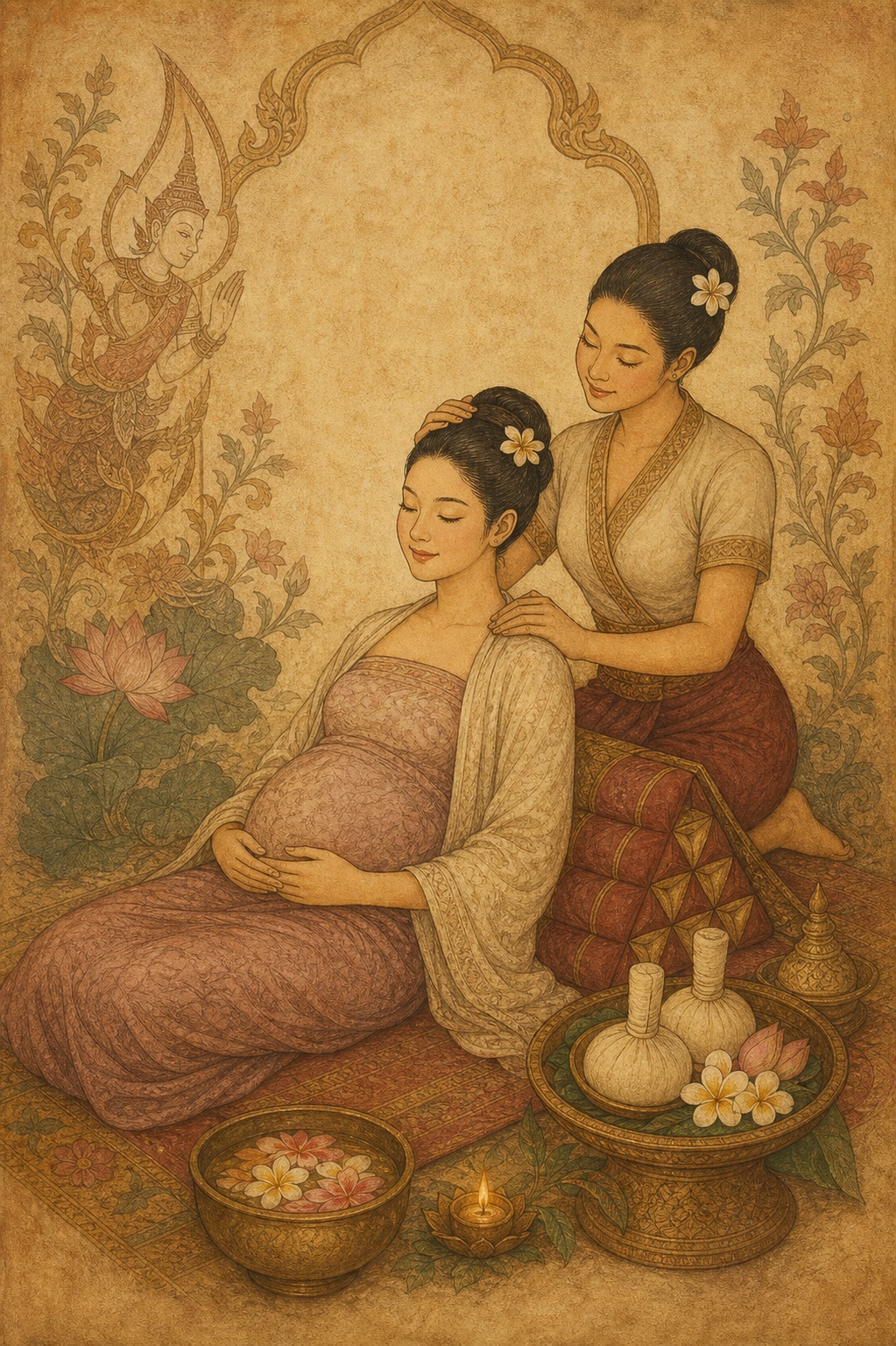
Prenatal Spa Rituals, Labor Preparation and Postpartum Care is part of a five-article advanced prenatal massage course outline for Nuad Thai School. It turns a long curriculum into a focused blog lesson for massage students, spa therapists and wellness professionals.
A complete guide to nervous system regulation, luxury prenatal spa rituals, aromatherapy safety, labor support concepts, postpartum recovery, consultation and spa menu integration.
Important scope note: prenatal massage education supports comfort, relaxation, body awareness and professional care. It does not diagnose pregnancy complications, replace medical care or promise pregnancy, labor or postpartum outcomes.
Key Takeaways
- Advanced prenatal massage begins with screening, positioning, consent and referral logic before technique.
- Therapists must adapt pressure, duration, body area and client position to trimester, symptoms and medical context.
- This topic connects directly to the Private Prenatal Massage Course at Nuad Thai School.
- Red flags such as bleeding, fever, severe hypertension, suspected clotting issues or preeclampsia symptoms require medical guidance rather than massage.
Breathing and Nervous System Regulation
Advanced prenatal massage should include diaphragmatic breathing, relaxation breathing and breath-guided rhythm. Slow touch, predictable communication and calm pacing can support parasympathetic regulation and sleep-focused sessions.
Emotional Support Through Touch
Pregnancy can carry joy, stress, fear, trauma history and body vulnerability. Trauma-informed prenatal care means asking permission, explaining choices, preserving draping, giving the client control and never treating emotional release as a performance.
Luxury Prenatal Spa Rituals
A high-end prenatal experience uses soft lighting, comfortable temperature, quiet music, discreet draping and safe sensory design. Aromatherapy must be conservative: approved oils, low dilution, allergy screening and avoidance of oils or heat applications that are not appropriate for pregnancy.
Specialized Treatment Areas
Lower back and pelvis work may include SI joint comfort, lumbar decompression and piriformis softening. Legs and feet need edema-aware lightness. Neck and shoulders often need relief from upper body compensation. Abdominal touch, if taught, stays gentle, consent-based and emotionally supportive.
Labor Preparation and Support Concepts
Third trimester work can focus on pelvic relaxation, sacral comfort, hip mobility and breathing support. Labor support concepts may include partner-assisted comfort touch and non-medical acupressure education, but the article should never promise labor induction or clinical outcomes.
Postpartum Transition and Spa Business Integration
Postpartum massage may support gentle recovery, circulation comfort and emotional grounding. C-section awareness, scar timeline respect and breastfeeding-related neck or shoulder tension belong in advanced training. Spas can package this into ethical prenatal menus, VIP maternal wellness journeys and educational marketing that builds trust.
Complete Infographic

Professional Decision Matrix
| Layer | What to cover | Training cue |
|---|---|---|
| Anatomy | uterus and pelvis, placenta, amniotic sac, hormonal change, lymphatic flow, posture, lumbar load and breathing mechanics | Name the tissues and vulnerable structures before choosing pressure. |
| Technique | supported side-lying massage, semi-reclined access, seated work, gentle Swedish adaptations, myofascial softening, lymphatic drainage and breath-paced touch | Teach movement slowly, then add rhythm and feedback. |
| Safety | screen high-risk pregnancy, preeclampsia, vaginal bleeding, suspected clotting issues, placental complications, fever, severe hypertension and medical red flags | Modify, stop or refer when the client's condition requires it. |
| Course path | Private Prenatal Massage Course | Connect the topic to supervised practice in the related course. |
Sources and Safety Frame
The generator checked pregnancy-specific ACOG resources, NCCIH massage safety information, lymphatic physiology references and a recent PubMed watch. The article uses those signals to keep the tone educational, conservative and appropriate for a school blog.
FAQ
Can prenatal massage include aromatherapy?
It can, but only with careful screening, low dilution, conservative oil choices and respect for scent sensitivity.
Should postpartum care be part of prenatal massage training?
Yes. Postpartum recovery, C-section awareness, breastfeeding posture and emotional grounding complete the maternal wellness journey.
Study This Topic in Bangkok
Students who want supervised practice can continue with the Private Prenatal Massage Course. Reading builds the theory; hands-on correction builds the professional touch, body mechanics and confidence required for maternal care.