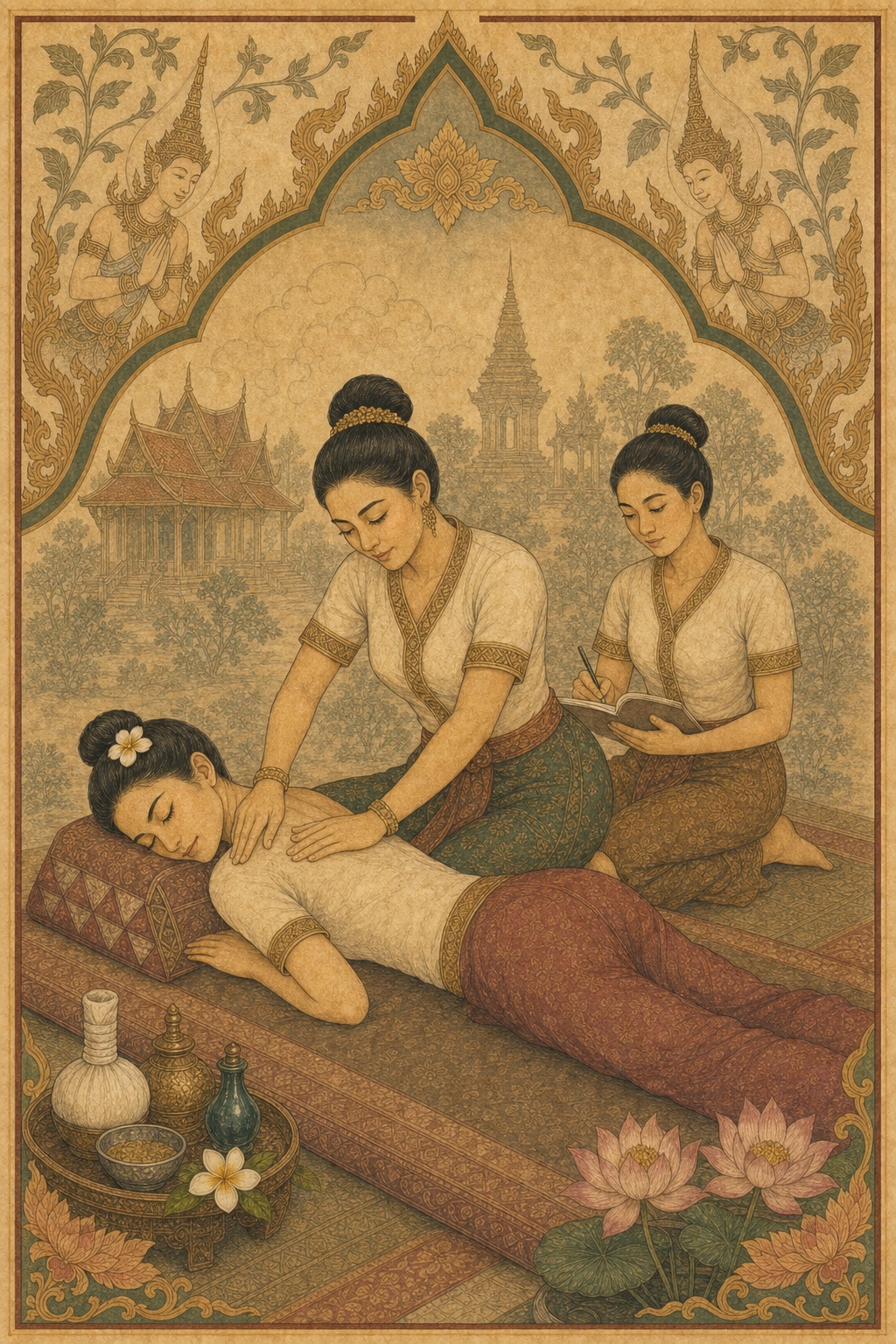
Swedish Massage Training: Effleurage, Kneading and Safe Flow is written as a serious training guide for students, spa therapists and wellness professionals. It connects a course topic offered by Nuad Thai School with anatomy, technique, safety, current research watch signals and practical classroom application.
The answer in short: this subject should be taught through major muscle groups, superficial fascia, circulation language, joint position and relaxation physiology, then practiced through effleurage, petrissage, broad compression, friction limits, draping, side transitions and full-session pacing. The safe boundary is equally important: avoid contraindicated pressure, exposed draping, inflamed tissue, acute injury, neurological symptoms and medical outcome promises.
Key Takeaways
- This article belongs to the Swedish Massage topic and links naturally to the Private Swedish Massage Course.
- Good massage education explains what the therapist does, which tissues are involved, why pressure is adapted and when a technique should be avoided.
- Medical, anatomical and scientific vocabulary is used for education only, not to diagnose or promise treatment outcomes.
- Dated references, source links and clear safety boundaries make the article suitable for serious professional learning.
Research Watch and Why It Matters
This guide uses authoritative standing references and, when available, recent indexed research to stay anchored in credible information instead of repeating generic spa marketing.
For this evergreen guide, the source base prioritizes the standing safety, anatomy and training references listed below. Equipment instructions should also be checked against manufacturer guidance and the rules that apply in the place of practice.
A research title is not automatically a medical claim. The evidence watch is used to improve the educational angle: anatomy, contraindications, therapist education, client communication and responsible wording.
Anatomy and Physiology
For this subject, the anatomical focus is major muscle groups, superficial fascia, circulation language, joint position and relaxation physiology. A student should be able to identify the relevant region, explain why the pressure is light or deep, and name the structures that require caution.
Anatomy helps students avoid vague routines. Instead of memorizing movements, they learn to ask: where is the contact, what is the tissue response, what does the client report, and what should change if discomfort appears?
Technique and Classroom Method
The practical technique focus is effleurage, petrissage, broad compression, friction limits, draping, side transitions and full-session pacing. In class, this should be demonstrated slowly, practiced under correction and repeated until the student can keep posture, rhythm and pressure consistent.
A serious massage article should make the invisible parts of technique visible: stance, breath, angle, towel management, consent, pressure scale and the ability to stop immediately.
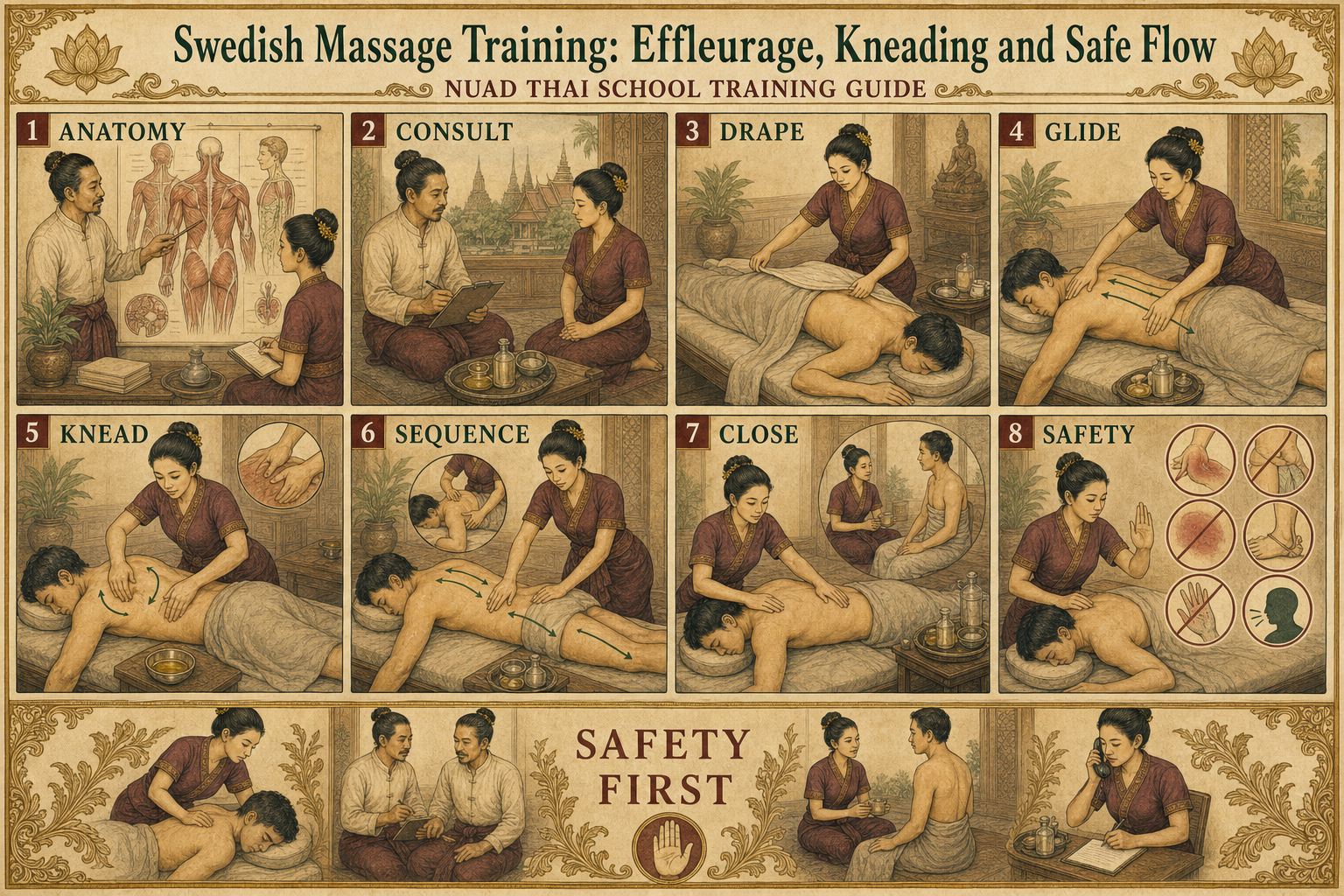
Step-by-Step Training Protocol
Students should first rehearse this sequence in order. The goal is not speed: each checkpoint must be completed, explained and accepted before the next stage begins.
- Consult. Confirm goals, pressure and areas to avoid.
- Drape. Protect privacy while keeping access practical.
- Glide. Use controlled effleurage to assess and warm tissue.
- Knead. Apply petrissage without pinching or rushing.
- Sequence. Connect body areas with calm transitions.
- Close. Reduce pace and explain simple aftercare.
During assessment, the student should be able to explain the purpose of each step, prepare the required materials, communicate with the client and decide when to continue, modify or stop. The instructor can then evaluate both manual technique and professional judgment rather than movement recall alone.
Equipment, Hygiene and Record-Keeping
Professional practice includes everything that happens before and after hands-on technique. Equipment condition, clean handling and accurate records are part of the treatment, not administrative extras.
- Prepare a stable table, fresh linens, bolsters and measured product in a clean dispenser within safe reach.
- Clean contact surfaces and dispensers between clients and manage used oily linens according to the facility protocol.
- Document treatment goals, pressure preference, sequence adaptations, client response and aftercare within massage scope.
Students should follow the equipment manufacturer's instructions and the hygiene rules that apply where they practise. When a tool cannot be cleaned reliably, is damaged or cannot be identified as clean, it should not return to service.
Complete Infographic
Professional Decision Matrix
| Layer | What to cover | Training cue |
|---|---|---|
| Anatomy | major muscle groups, superficial fascia, circulation language, joint position and relaxation physiology | Name the tissues and vulnerable structures before choosing pressure. |
| Technique | effleurage, petrissage, broad compression, friction limits, draping, side transitions and full-session pacing | Teach movement slowly, then add rhythm and feedback. |
| Safety | avoid contraindicated pressure, exposed draping, inflamed tissue, acute injury, neurological symptoms and medical outcome promises | Modify, stop or refer when the client's condition requires it. |
| Course path | Private Swedish Massage Course | Connect the topic to supervised practice in the related course. |
Safety, Contraindications and Scope
The safety focus is clear: avoid contraindicated pressure, exposed draping, inflamed tissue, acute injury, neurological symptoms and medical outcome promises. This section is essential for trust because it shows that the school is not making exaggerated wellness promises.
Massage education can discuss anatomy, physiology, relaxation, mobility and comfort. It should not claim to cure disease. Readers with medical symptoms should consult qualified health professionals, and students should learn referral logic early.
Related Training Paths
Nuad Thai School offers a complete catalog of specialist and professional training programs. For this topic, the most relevant study paths are:
- Private Swedish Massage Course - primary training path for this article.
- Private Sport Massage Course - complementary skills and supervised practice.
- Private Bamboo Massage Course - complementary skills and supervised practice.
- Private Deep Tissue Massage Course - complementary skills and supervised practice.
Reading establishes the theory. Supervised practice adds correction, repetition, body mechanics and the professional judgment required to adapt a session safely.
FAQ
Is Swedish Massage Training: Effleurage, Kneading and Safe Flow a medical treatment?
No. It is presented here as massage education and spa training. It may support comfort or relaxation for some clients, but it should not be used to diagnose, treat or cure disease.
Why include anatomy in a massage school blog article?
Anatomy helps students understand pressure, direction, contraindications and adaptation. It makes technique safer and more professional.
How is this topic connected to professional training?
It is anchored to the Private Swedish Massage Course and linked to complementary Nuad Thai School programs that develop related anatomy, technique, client communication and safety skills.