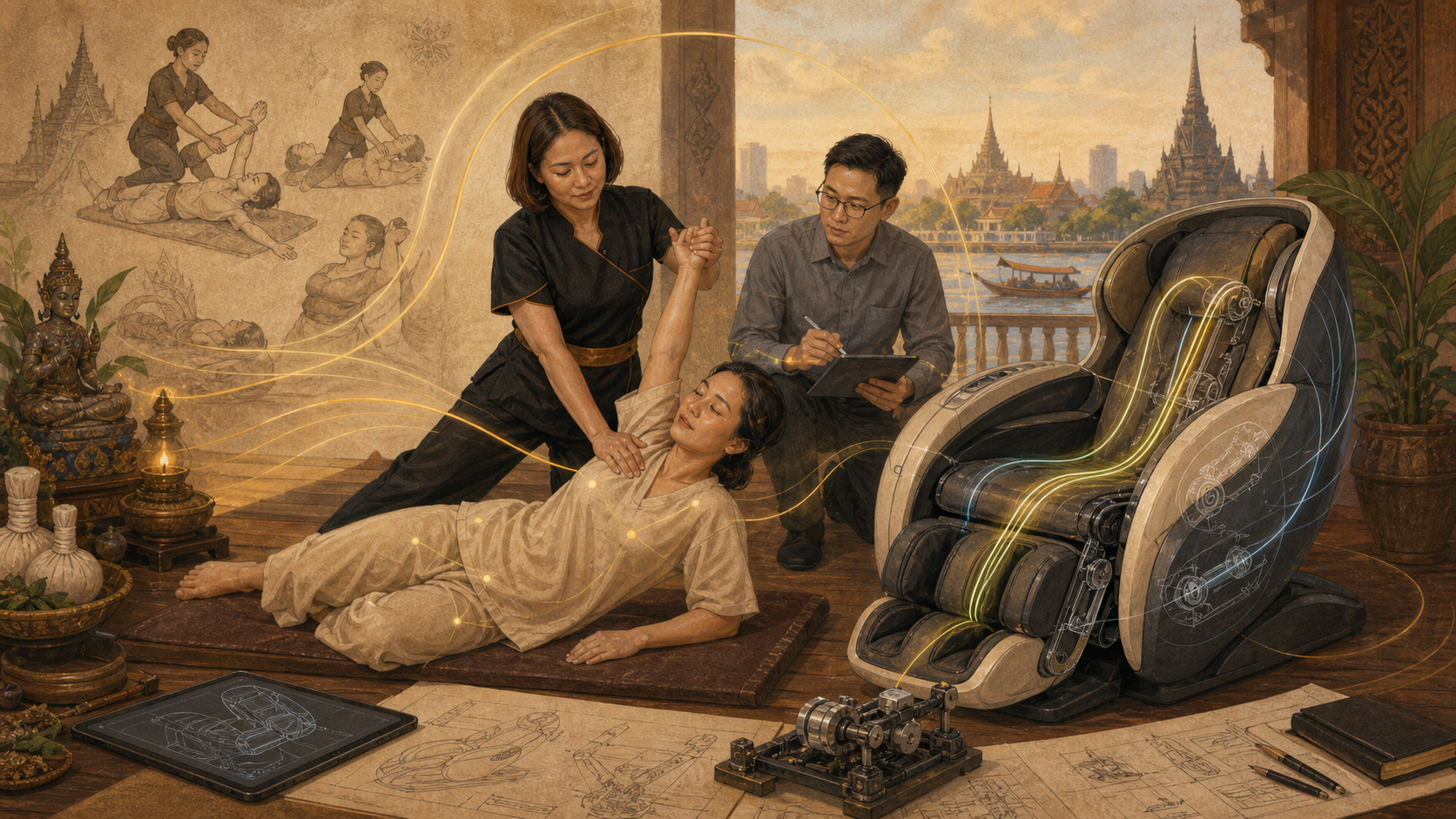
Mehr als sechs Monate lang arbeitete die Nuad Thai School Seite an Seite mit OSIM-Ingenieuren an einer Herausforderung, die fast unmöglich klang: Könnte ein Massagesessel das Gefühl, die Intelligenz und die therapeutische Absicht der Thai-Massage reproduzieren? Nicht einfach ein starker Druck. Nicht nur eine sich auf und ab bewegende Hinterwalze. Kein generischer „Stretch-Modus“ mit einem thailändischen Namen oben drauf. Der Ehrgeiz war viel anspruchsvoller. Das Ziel bestand darin, die echte Thai-Massagetechnik im Detail zu studieren, sie wiederholt zu testen, sie in technische Sprache zu übersetzen und dabei zu helfen, ein Stuhlerlebnis zu schaffen, das die Essenz von unterstützter Dehnung, rhythmischem Druck, Körperpositionierung und -entlastung in ein modernes Wellnessprodukt bringen könnte.
Thai-Massage wird oft als eine Kombination aus Akupressur, unterstütztem Yoga, passivem Dehnen, Kompression, Schaukeln und achtsamer Atmung beschrieben. Diese Beschreibung ist nützlich, aber jeder, der ernsthaft trainiert hat, weiß, dass sie unvollständig ist. Die wahre Kunst liegt im Timing, dem Körpergewicht, den Winkeln, Übergängen und der Fähigkeit des Therapeuten, die Person, die die Behandlung erhält, zu verstehen. Ein guter Thai-Massagetherapeut drückt nicht nur auf einen Punkt. Der Therapeut bereitet den Körper vor, stützt das Gelenk, prüft den Widerstand, setzt die richtige Hebelwirkung ein, passt den Druck an, löst langsam und lässt das Nervensystem folgen. Daraus einen Stuhl zu machen, erforderte mehr als das Kopieren einer Bewegung. Es erforderte zu verstehen, warum jede Bewegung funktioniert.
Hier wurde die Nuad Thai School eingeladen, einen Beitrag zu leisten. Unsere Aufgabe bestand darin, das praktische Fachwissen der Thai-Massageausbildung in den Forschungs- und Entwicklungsprozess einzubringen: Techniken zu demonstrieren, die Absicht hinter jeder Bewegung zu erklären, Prototypen zu testen, Feedback zum Körpergefühl zu geben und den OSIM-Ingenieuren zu helfen, zu verstehen, was die Thai-Massage von einer gewöhnlichen mechanischen Massage unterscheidet. Zum ersten Mal haben wir unsere gesamte Methode für ein Technologieentwicklungsprojekt dieser Art geöffnet und dabei nicht nur sichtbare Techniken, sondern auch die subtilen Details geteilt, die Schüler normalerweise durch praktische Korrektur lernen.
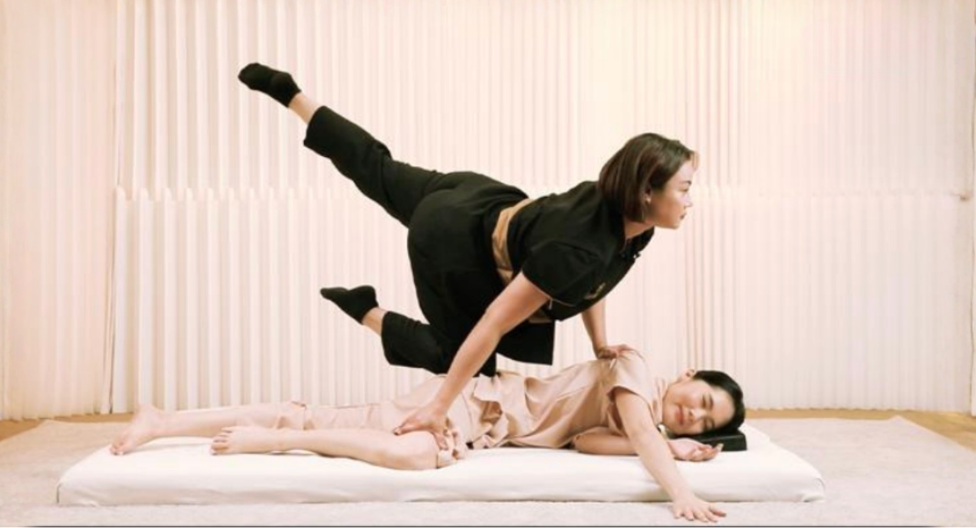
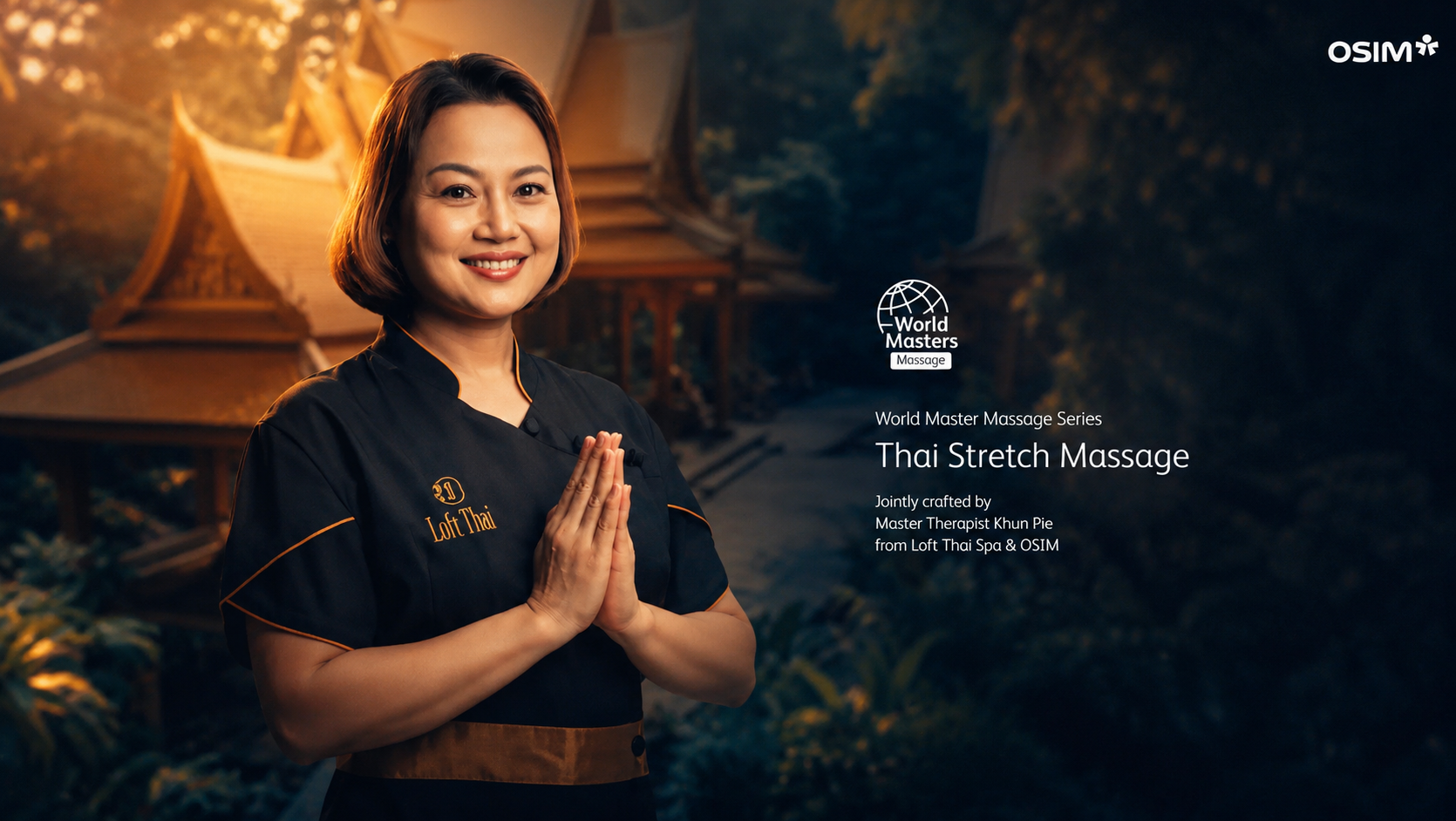
Warum die Thai-Massage so schwer nachzubilden ist
Viele Massagesessel können kneten, rollen, klopfen oder komprimieren. Diese Maßnahmen sind besonders bei müden Rücken und Beinen nützlich, aber die Thai-Massage erfordert etwas umfassenderes. Es ist ein Ganzkörpergespräch. Der Therapeut kann an den Füßen beginnen, entlang der Beine arbeiten, die Hüften öffnen, die Wirbelsäule mobilisieren, die Schultern entspannen, die Arme strecken und mit einer ruhigen Sitzsequenz abschließen. Jede Technik ist mit der nächsten verknüpft. Druck und Dehnung sind keine getrennten Erfahrungen; sie unterstützen sich gegenseitig.
Einer der am schwierigsten nachzubildenden Teile ist das unterstützte Dehnen. Bei der traditionellen Thai-Massage bleibt der Empfänger passiv, während der Therapeut den Körper in sicheren Bereichen bewegt. Als Stützpunkte nutzt der Therapeut Hände, Unterarme, Knie oder Füße. Der Praktiker kontrolliert die Geschwindigkeit, Richtung und Tiefe jeder Bewegung. Eine Beinstreckung mag von außen einfach aussehen, sie hängt jedoch von der Hüftposition, dem Kniewinkel, der Knöchelunterstützung, der Atmung, dem Muskelschutz und der Flexibilität des Empfängers ab. Zu wenig Unterstützung fühlt sich leer an. Zu viel Kraft fühlt sich unsicher an. Das richtige Gefühl ist spezifisch: Der Körper fühlt sich gehalten, geführt und geöffnet.
Eine weitere Herausforderung ist der dreidimensionale Druck. Die Thai-Massage verläuft selten in einer vollkommen geraden Linie. Ein Therapeut kann nach unten drücken, dann leicht nach vorne und sich dann weglehnen, während er den Kontakt aufrechterhält. Eine Drehdehnung kann Hüftstabilisierung, Wirbelsäulenrotation und sanfte Traktion kombinieren. Eine Schulteröffnung kann Gegendruck hinter dem Rücken erzeugen, während die Arme nach außen gezogen werden. Diese Techniken sind lebendig, weil der Therapeut den Blickwinkel sofort ändern kann. Für Ingenieure bedeutete dies die Frage: Wie können Motoren, Airbags, Rollen, Körpersensoren und programmierte Abläufe ein Gefühl erzeugen, das sich wie intelligente menschliche Unterstützung anfühlt und nicht wie eine feste mechanische Routine?
Vom Massageraum zum technischen Labor
Der R&D; Der Prozess begann mit der Beobachtung. Techniken wurden nicht als isolierte Bewegungen, sondern als Behandlungserfahrungen behandelt. Die Ingenieure von OSIM mussten sehen, wie ein Therapeut den Klienten vorbereitet, wo der Körper stabilisiert wird, wie viel Kontakt aufrechterhalten wird und wie eine Bewegung beginnt und endet. An der Nuad Thai School vermitteln wir den Schülern, dass der Übergang zwischen den Techniken genauso wichtig ist wie die Technik selbst. Eine plötzlich einsetzende Dehnung kann den Empfänger verspannen. Eine Dehnung, die mit Rhythmus und Unterstützung eingeleitet wird, kann sich sicher anfühlen, selbst wenn sie tief ist.
Während des Projekts wurden Techniken immer wieder demonstriert. Das Technikerteam untersuchte die thailändische Beinstreckung, die thailändische Drehstreckung, die Hüftöffnung, die Rückenmobilisierung, die Schulterfreigabe, den Fuß- und Wadendruck und die Art und Weise, wie bei der Thai-Massage Hebelwirkung statt roher Gewalt zum Einsatz kommt. Wir besprachen, was der Klient in jeder Phase spüren sollte: Wärme, Öffnung, Dekompression, Druckentlastung, Gelenkfreiheit, verbesserte Körperwahrnehmung und Ruhe. Diese Empfindungen wurden zu Designzielen.
Dann kam die Übersetzungsarbeit. Ein Massagelehrer könnte sagen: „Stützen Sie das Knie, bevor Sie die Hüfte strecken“ oder „Lassen Sie den Körper weicher werden, bevor Sie tiefer gehen.“ Ein Ingenieur muss dies in Position, Timing, Druck, Sensorrückmeldung und Bewegungsbereich übersetzen. Hier wurde die Zusammenarbeit spannend. Die Sprache der traditionellen Karosserie traf auf die Sprache des mechanischen Designs. Die eine Seite verstand menschliches Gewebe, Komfort und therapeutische Absicht. Der andere verstand Motoren, Winkel, Sicherheitsgrenzen, Wiederholbarkeit und Produktzuverlässigkeit. Die besten Ideen entstanden, wenn beide Seiten die jeweils andere Disziplin respektierten.
Der sechsmonatige Testrhythmus
Ein Projekt wie dieses kann nicht in einer einzigen Demonstration gelöst werden. Die Thai-Massage wird durch Wiederholung, Vergleich und Korrektur empfunden. Über mehr als sechs Monate hinweg durchlief die Arbeit Zyklen: Demonstration einer Technik, Prototyp einer Stuhlreaktion, Testen des Gefühls, Identifizieren, was sich zu mechanisch anfühlte, Anpassen der Bewegung, erneutes Testen und erneutes Verfeinern. Manchmal war eine große Änderung erforderlich, beispielsweise eine Änderung der Dehnungs- und Kompressionsreihenfolge. Manchmal war die Veränderung äußerst gering: eine langsamere Freigabe, ein weicherer Halt, ein anderes Timing zwischen Beinkompression und Rückenunterstützung.
Eine wichtige Lektion war, dass Realismus nicht nur durch Stärke entsteht. Viele Menschen gehen davon aus, dass ein besserer Massagesessel stärker drücken sollte. Die Thai-Massage lehrt das Gegenteil: Tiefe ist nicht dasselbe wie Kraft. Tiefenarbeit kann ruhig sein, wenn sie durch die richtige Position und den richtigen Rhythmus unterstützt wird. Ein Therapeut kann mit seinem Körpergewicht, Geduld und Präzision eine kraftvolle Entspannung bewirken. Beim Testen haben wir nach dem Punkt gesucht, an dem sich der Stuhl effektiv anfühlt, ohne aggressiv zu werden. Das Ziel bestand nicht darin, den Körper zu überwältigen. Ziel war es, den Körper zum Loslassen einzuladen.
Eine weitere Lektion war, dass ein Thai-Massageerlebnis eine Sequenz braucht. Wenn der Stuhl die Beine streckt, bevor der Körper gestützt wird, kann sich die Bewegung überraschend anfühlen. Wenn der Stuhl die Waden zusammendrückt, während der Rücken instabil ist, kann es sein, dass der Empfänger sich abstützt. Wenn der Stuhl zuerst die Hüften und den Rücken stützt und dann nach und nach die Beinbewegung hinzufügt, fühlt sich die Dehnung natürlicher an. So arbeiten echte Therapeuten. Sie erzwingen kein Ergebnis; sie bauen es.
Welche Techniken mussten übersetzt werden?
Die erste Technikfamilie war die Bein- und Hüftstreckung. Die Thai-Massage nutzt viele Möglichkeiten, um den Unterkörper zu öffnen: Dehnung der Oberschenkelmuskulatur, Hüftrotation, gebeugte Beine, Zugkraft, Wadendruck und kontrolliertes Schaukeln. Bei einem Stuhl besteht die Herausforderung darin, dass der Empfänger sitzt oder liegt und nicht frei auf einer Matte liegt. Die technische Frage bestand darin, wie man Beinhalter, Luftkompression, Liegewinkel und programmierte Bewegungen nutzen kann, um das Gefühl einer geführten Öffnung des Unterkörpers zu erzeugen. Die therapeutische Absicht war Mobilität, Durchblutungskomfort und Linderung des schweren, eingeengten Gefühls, das viele Menschen nach langem Sitzen verspüren.
Die zweite Familie war die Mobilisierung der Wirbelsäule und der Taille. Thai-Twist-Stretch ist eine der bekanntesten Techniken, da sie ein Gefühl der Drehung des Oberkörpers erzeugt. Auf der Matte stabilisiert der Therapeut die Schulter oder Hüfte und dreht dabei den Körper sanft. Das muss ein Stuhl mit Bedacht angehen. Das Gefühl muss sich gestützt und breit anfühlen, nicht scharf oder gezwungen. Dies erforderte Aufmerksamkeit auf das Timing, die Seitwärtsbewegung, die Rückenunterstützung und darauf, wie der Körper des Empfängers während der Drehung gehalten wird.
Die dritte Familie war eine Schulter- und obere Rückenöffnung. Die Thai-Massage endet oft mit Schulterdehnungen im Sitzen, Armzug und Entspannung des Nackens. Diese Bewegungen sind für moderne Kunden wichtig, da sich Bildschirmhaltung, Reisen und Stress oft im oberen Rückenbereich ansammeln. Um dies auf einen Stuhl zu übertragen, musste man über einfache Nackenrollen hinausdenken. Es bedeutete, ein Gefühl der Brustöffnung, der Dekompression der Schulter und der unterstützten Entspannung zu erzeugen. Die Arbeit musste sich erstklassig, ruhig und therapeutisch anfühlen und nicht wie eine Maschine, die den Körper packt.
Die vierte Familie war Druckrhythmus. Die Thai-Massage hat einen Puls. Ein Therapeut beugt sich vor, wartet, lauscht durch die Hände und lässt dann langsam los. Dieser Rhythmus kann das Nervensystem beruhigen. Bei einem Stuhl muss der Rhythmus programmiert sein, aber er darf sich nicht wie ein Roboter anfühlen. Es braucht Abwechslung, Geduld und Raum. Der Stuhl sollte wissen, wann er halten, wann er sich bewegen, wann er weicher werden und wann er wechseln muss. Dieser Rhythmus war einer der wichtigsten Teile unseres Feedbacks.
Therapeutische Wirkung ohne Verlust der Sicherheit
Wenn ein menschlicher Therapeut arbeitet, ist die Sicherheit kontinuierlich gegeben. Der Therapeut sieht das Gesicht des Empfängers, hört den Atem, spürt den Muskelwiderstand und kann sofort aufhören. Ein Massagestuhl braucht eine andere Sicherheitsstrategie. Es muss Designgrenzen, Körperpositionierung, wählbare Intensität, progressive Sequenzen und Benutzerkontrolle nutzen. Während der gesamten Entwicklungsarbeit musste der therapeutische Anspruch mit Komfort und Verantwortung verbunden bleiben. Ein Stuhl kann niemals ein klinisches Urteilsvermögen oder eine individuelle Behandlung ersetzen, aber er kann ein sorgfältig gestaltetes Wellness-Erlebnis bieten, wenn seine Bewegungen den Körper respektieren.
Diese Unterscheidung ist wichtig. Der Zweck bestand nicht darin, zu behaupten, dass ein Stuhl zum Therapeuten wird. Ziel war es, einen Stuhl in seiner Bewegungslogik menschlicher zu gestalten. Die Thai-Massage lieferte ein Vorbild: vorbereiten, stützen, komprimieren, dehnen, lösen, ruhen. Diese Prinzipien können das mechanische Design leiten, ohne den Eindruck zu erwecken, dass Technologie und Hände identisch sind. Tatsächlich wurde das Projekt stärker, weil jeder den Unterschied verstand. Der Stuhl musste das tun, was ein Stuhl wunderbar kann, und gleichzeitig von dem lernen, was Therapeuten wissen.
Für die Nuad Thai School war dies auch ein lehrreicher Moment. Es zeigte sich, dass traditionelles Wissen zu moderner Innovation beitragen kann, wenn es klar erklärt wird. Die Thai-Massage ist nicht altmodisch, denn sie kommt aus der Tradition. Es bleibt relevant, weil seine Prinzipien zutiefst praktisch sind: Körpermechanik nutzen, Struktur respektieren, mit Rhythmus arbeiten, den Klienten beobachten und durch intelligente Unterstützung Veränderungen herbeiführen. Dieselben Prinzipien können die Inspiration für neue Werkzeuge sein, wenn sie sorgfältig gehandhabt werden.
Warum diese Zusammenarbeit wichtig ist
OSIM ist international für Innovationen bei Massagestühlen bekannt, während die Nuad Thai School ihre Wurzeln in der Thai-Massageausbildung, Spa-Technik und der lebendigen Praxis von Nuad Thai hat. Durch die Zusammenführung dieser Welten entstand eine seltene Art der Zusammenarbeit. Es war nicht nur eine Markenpartnerschaft. Es war ein langer praktischer Austausch zwischen Touch-Expertise und Engineering-Expertise. Der Massageraum wurde zur Forschungsquelle. Der Stuhl wurde zum Testgelände. Die gemeinsame Frage war einfach, aber anspruchsvoll: Kann moderne Technologie mehr von der Intelligenz der traditionellen Thai-Massage bieten?
Nach Monaten des Testens war die Antwort differenzierter als ein einfaches Ja. Ein Stuhl kann nicht wie ein Meistertherapeut improvisieren. Es kann den emotionalen Zustand, die Gewebereaktion oder subtile Beschwerden nicht vollständig erkennen. Aber ein Stuhl kann viel realistischer werden, wenn er auf der Grundlage echter Technik statt auf generischen Bewegungsetiketten gebaut wird. Es kann von der Reihenfolge der Thai-Massage lernen, von der Art und Weise, wie Druck die Dehnung vorbereitet, von der Art und Weise, wie Unterstützung Vertrauen schafft und von der Art und Weise, wie sich die Entspannung allmählich anfühlen sollte. Es kann ein umfassenderes Wellness-Erlebnis bieten, wenn Ingenieure und Therapeuten gemeinsam entwerfen.
Aus diesem Grund fühlte sich dieses Projekt für die Nuad Thai School als bedeutsam an. Wir wurden nicht nur gebeten, in einer Kampagne aufzutreten. Wir wurden gebeten, Wissen einzubringen. Unser Fachwissen wurde geprüft, hinterfragt, übersetzt und angewendet. Wir mussten erklären, warum eine Bewegung funktioniert, was der Empfänger fühlen sollte und welche Details den Unterschied zwischen einer Neuheit und einem glaubwürdigen Thai-Massageerlebnis ausmachen. Diese Art von Arbeit würdigt das Handwerk. Es behandelt die Thai-Massage als eine ernsthafte Disziplin der Körperarbeit mit Wissen, das das moderne Wellness-Design prägen kann.
Das menschliche Gefühl hinter der Technologie
Im Mittelpunkt des Projekts stand eine sehr menschliche Idee: Menschen wollen sich gehalten fühlen. Eine gute Thai-Massage vermittelt dieses Gefühl. Der Empfänger hat das Gefühl, dass der Therapeut anwesend ist, dass der Körper gestützt wird und dass der Druck zielgerichtet erfolgt. In einer Welt, in der viele Menschen zu lange sitzen, sich zu wenig bewegen und Stress im Körper tragen, ist das Bedürfnis nach intelligenter Entspannung real. Die Frage ist, wie man dieses Gefühl mehr Menschen vermitteln und gleichzeitig den Respekt vor der Tradition wahren kann.
Das OSIM-Projekt hat uns gebeten, uns eine Brücke vorzustellen. Auf der einen Seite befindet sich die Matte, auf der seit Generationen Thai-Massage praktiziert, gelehrt und verfeinert wird. Auf der anderen Seite steht ein moderner Stuhl, gebaut aus Sensoren, Motoren, Airbags und Programmierung. Zwischen den beiden liegt R&D;: praktisches Testen, technische Anpassung, ehrliches Feedback und Geduld. Das Ergebnis ist kein Ersatz für das Erlernen der Thai-Massage oder die Behandlung durch einen erfahrenen Therapeuten. Es ist ein neuer Ausdruck derselben Inspiration: Bewegung, Druck und Rhythmus sollen dazu beitragen, dass sich der Körper offener und entspannter fühlt.
Für Schüler der Nuad Thai School ist die Geschichte auch eine Einladung. Wenn Sie die Thai-Massage intensiv erlernen, merken Sie sich nicht nur eine Sequenz. Sie lernen, über den Körper nachzudenken. Dieses Wissen kann Kunden in einem Spa helfen, eine berufliche Karriere unterstützen, die Produktentwicklung inspirieren, das Wellness-Design verbessern und dazu beitragen, die Qualität der Thai-Massage auf ihrer Reise um die Welt zu schützen. Tradition wird stärker, wenn sie sich in neuen Kontexten klar erklären kann.
Das Unmögliche schaffen
Der Satz „das Unmögliche entwickeln“ klingt dramatisch, aber während dieser Zusammenarbeit fühlte es sich richtig an. Ein Massagestuhl, der die Thai-Massage wirklich versteht, ist ein schwieriger Traum. Die Thai-Massage ist körperlich, intuitiv und zutiefst menschlich. Dabei wird der gesamte Körper des Therapeuten beansprucht. Es kommt auf Vertrauen an. Es ändert sich von Moment zu Moment. Um auch nur einen Teil dieser Erfahrung nachzubilden, war von allen Beteiligten Demut erforderlich.
Dennoch sind es oft schwierige Projekte, die es wert sind, durchgeführt zu werden. Über sechs Monate lang arbeiteten die Ingenieure der Nuad Thai School und von OSIM an den Details: Dehnung für Dehnung, Druck für Druck, Timing für Timing. Wir haben getestet, was sich real und was künstlich anfühlte. Wir haben verfeinert, wie der Stuhl den Körper hält, wie er Bewegung einleitet, wie er Druck abbaut und wie er eine Sequenz erzeugt, die sich eher einer Thai-Massage anfühlt als einem normalen mechanischen Programm. Die Arbeit war präzise, manchmal langsam und oft faszinierend.
Der endgültige Wert des Projekts ist nicht nur der Stuhl. Es ist der Beweis dafür, dass Thai-Massage-Expertise in ernsthafte Innovationsgespräche gehört. Wenn traditionelle Praktiker, Pädagogen und Ingenieure respektvoll zusammenarbeiten, können sie etwas schaffen, das keine Seite alleine schaffen könnte. Die Nuad Thai School brachte die Hände, die Methode, das Testen und das Gefühl mit. OSIM brachte die Engineering-, Produktvisions- und Technologieplattform mit. Gemeinsam erkundete das Projekt eine neue Möglichkeit für modernes Wohlbefinden: ein Massagestuhl-Erlebnis, inspiriert von echter Thai-Massagetechnik, geformt durch monatelange R&D;und so konzipiert, dass es sich realistischer, intelligenter und therapeutischer anfühlt als alles, was ein generisches Massageprogramm bieten könnte.
Für uns ist das der stolzeste Teil der Geschichte. Die Thai-Massage ist nicht nur ein Erbe, das es hinter Glas zu bewahren gilt. Es ist ein lebendiges Wissenssystem. Es kann Studenten beigebracht, in Spas praktiziert, international verbreitet und sogar in die Sprache fortschrittlicher Wellness-Technologie übersetzt werden. Diese Zusammenarbeit mit OSIM gab der Nuad Thai School die Chance zu zeigen, welchen Beitrag unsere Tradition leisten kann, wenn das Ziel ehrgeizig genug ist: nicht nur einen Stuhl in Bewegung zu setzen, sondern ihm zu helfen, sich den Händen, dem Rhythmus und der Weisheit der Thai-Massage näher zu fühlen.
Lernen Sie die menschliche Methode hinter der Innovation kennen
Die Nuad Thai School lehrt Thai-Massage als praktische Disziplin: Körpermechanik, unterstütztes Dehnen, sicherer Druck, therapeutischer Rhythmus und professioneller Behandlungsablauf. Studierende, die diese Grundlagen verstehen, können mit echten Kunden arbeiten, sich an unterschiedliche Körper anpassen und verstehen, warum authentische Techniken im modernen Wellness immer noch wichtig sind.